HANKUKIN Decode
Korea Refunds: The 7-Day Right Does Not Reach a Shop Counter
Korean shops post 환불 불가 — no refunds — while travel guides repeat that Korea gives you seven days to change your mind. Both are half true, and the half that decides your money is where you bought it: the seven days sit in the e-commerce Act and reach only buying at a distance. The statute's own word, the clause that protects opening a box, and why a sign at a till outranks a national standard.
환불 불가 (hwan-bul bul-ga). Four syllables taped to the side of a till, and every guide to shopping in Korea will tell you that it does not really mean what it says, because Korea gives consumers seven days to change their minds.
The seven days are real. They are in an Act, they run longer if the seller agreed to longer, and if there is an argument about whether you damaged the thing, the Act puts the proving on the seller. But they are attached to a method of selling, not to a country and not to a kind of shop. Read the opening line of article 17 and the sign at the till stops being a bluff and starts being accurate.
Five words, and only one of them is in the statute
Shop staff and shopping apps use these more or less interchangeably. The law does not.
| Word | Sounds like | What it actually names |
|---|---|---|
| 환불 | hwan-bul | Money back |
| 교환 | gyo-hwan | The same item again — not money |
| 반품 | ban-pum | The physical act of sending goods back |
| 단순변심 | dan-sun-byeon-sim | “Simple change of mind” — a reason, and a cost allocation |
| 청약철회 | cheong-yak-cheol-hoe | Withdrawal of the offer. The statutory word |
If you are searching Korean pages for your rights, 청약철회 is the search term. 환불 will find you shop policies; 청약철회 will find you the Act. The two lists barely overlap, and that gap is most of why this is confusing in English.
The Act cares how you bought it, not what you bought
The seven days sit in the Act on Consumer Protection in Electronic Commerce, article 17, and the sentence opens by naming who you must have bought from: a 통신판매업자 (tong-sin-pan-mae-eop-ja). Article 2 defines the underlying activity, 통신판매 (tong-sin-pan-mae), as selling where information about the goods is supplied by post, telecommunications or other prescribed means and the consumer’s offer is received that way.
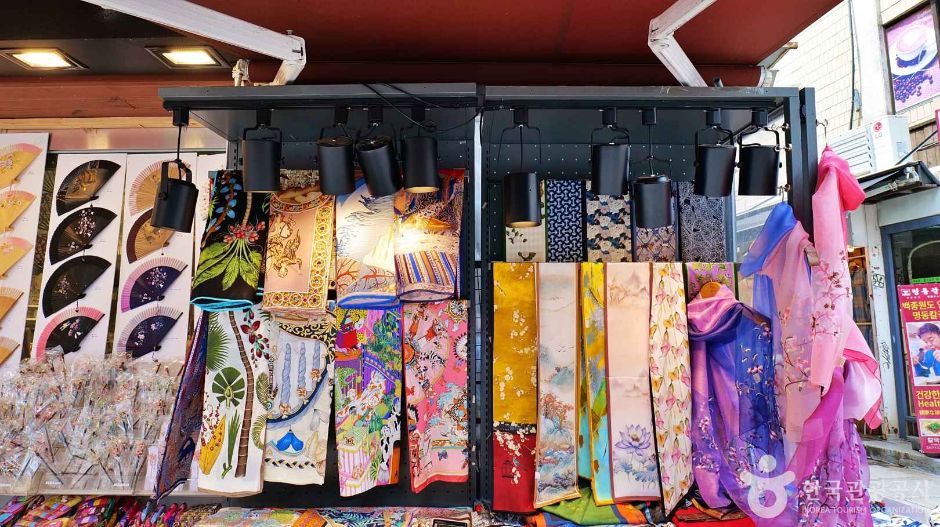
A person standing at a counter in Myeongdong holding the box is not doing that. Neither is the stall at the top of this page, or a duty-free counter you walked up to, or a café. Nothing on that frontage says anything about returns, and nothing has to. The seven days do not narrow at a shop; they were never pointed at one.
This is the single most useful thing on this page, so here it is without decoration: the statutory cooling-off period is a distance-selling right. Buy the same tube of cream from the same brand’s app and you have it. Buy it in the shop and you have whatever that shop chose to promise you, which is what the sign is for.
What the seven days actually protect
Article 17(2) lists the situations where you lose the right, and one of them carries a proviso that is worth the whole section — because it draws the line that shop signs blur.
소비자에게 책임이 있는 사유로 재화등이 멸실되거나 훼손된 경우. 다만, 재화등의 내용을 확인하기 위하여 포장 등을 훼손한 경우는 제외한다. Where the goods have been lost or damaged for a reason attributable to the consumer. Provided that where the packaging has been damaged in order to check the contents of the goods, this is excluded.
Act on Consumer Protection in Electronic Commerce, art. 17(2)1 전자상거래 등에서의 소비자보호에 관한 법률 제17조 제2항 제1호 26 August 2026
Opening it to see what it is, on this wording, is not the thing that costs you the right. The next subparagraph is: value substantially reduced by your use or partial consumption. So the boundary the Act draws runs between looking and using — not, as 개봉 시 환불 불가 signs suggest, at the seal.
Two more parts of the same article that rarely make it into English summaries. The exclusions for use, ageing, opened copiable media and started digital services all fall away if the seller failed to mark the goods clearly as non-returnable or offer a trial. And where there is a dispute about whether you damaged the item, or when the contract was made, or when the goods arrived, article 17(5) puts the burden of proving it on the seller.
If it was not what the page said, the clock is a different clock
Change of mind gets seven days. Goods that differ from the display, the advertisement or the contract get three months from delivery, or thirty days from the day you knew or could have known — article 17(3). That is the clause for a colour that is not the colour, a “2-in-1” that arrives as one, a hotel add-on that never existed.
It also flips who pays the postage, which is where the words earn their keep:
제17조제1항에 따른 청약철회등의 경우 공급받은 재화등의 반환에 필요한 비용은 소비자가 부담하며, 통신판매업자는 소비자에게 청약철회등을 이유로 위약금이나 손해배상을 청구할 수 없다. In the case of a withdrawal under article 17(1), the cost necessary to return the goods supplied shall be borne by the consumer, and the mail-order seller may not claim a penalty or damages from the consumer on the ground of the withdrawal.
Act on Consumer Protection in Electronic Commerce, art. 18(9) 전자상거래 등에서의 소비자보호에 관한 법률 제18조 제9항 26 August 2026
You pay the return shipping for a change of mind; the seller pays it under article 18(10) when the goods were not as advertised. So when a Korean seller’s chat window asks whether this is 단순변심, it is not making conversation. It is asking which paragraph applies, and the answer moves a courier fee.
On the money itself: article 18(2) gives the seller three business days from getting the goods back to refund you, with statutory late interest after that, and article 18(3) requires a seller paid by card to ask the card company to cancel or stop the charge without delay. If you paid with a foreign card, the refund lands by the same route the payment took — which, given how Korean online payment authentication treats foreign cards, is a route many visitors never got to use in the first place.
At the counter, the sign is doing legal work
Korea does have a national schedule of what a seller should do when a purchase goes wrong: the 소비자분쟁해결기준, currently Korea Fair Trade Commission notice 2025-14, in force since 18 December 2025. Note where the government files it. It is not under 법령, the statutes, but under 행정규칙 (haeng-jeong-gyu-chik) — administrative rules, the tier an agency issues on its own authority. Open its goods table and the first page sets the pattern. Every dispute type in the left column is something being wrong — short weight, spoilage, a date passed, foreign matter, a reaction — and the remedy column answers most of them with one phrase, repeated down the page: exchange this item, or refund the purchase price. Wrong is what the schedule is for. Changing your mind is not a row on it.
And the parent statute says exactly how much force the schedule has:
제2항의 규정에 따른 소비자분쟁해결기준은 분쟁당사자 사이에 분쟁해결방법에 관한 별도의 의사표시가 없는 경우에 한하여 분쟁해결을 위한 합의 또는 권고의 기준이 된다. The Consumer Dispute Resolution Standards under paragraph (2) shall serve as the criterion for agreement or recommendation to resolve a dispute only where there is no separate declaration of intent between the parties as to the method of resolving it.
Framework Act on Consumers, art. 16(3) 소비자기본법 제16조 제3항 26 August 2026
Only where there is no separate declaration of intent. A sign at the till stating 교환만 가능 (gyo-hwan-man ga-neung — exchange only) is a separate declaration of intent, posted before you paid. That is what it is for, and it is why the sign is written in that flat, announcement-like Korean rather than as a request.
The practical version: at a counter, ask before you pay, not after. 교환 되나요? (gyo-hwan doe-na-yo — can I exchange it?) and 영수증 주세요 (yeong-su-jeung ju-se-yo — please give me the receipt) are worth more than any argument afterwards. This is the same shape of advice as the phrases nobody teaches you for shops and restaurants — the useful sentence comes before the transaction, not after it.
Who you can call, and in what language
If a seller and a buyer cannot agree, the notice itself says either party may take it to the head of a central administrative agency, a mayor or provincial governor, the President of the Korea Consumer Agency, or a consumer organisation. In practice that runs through 1372소비자상담센터, the consumer counselling centre.
We checked its site on 26 August 2026. There is no English on it — no language switcher in the navigation, and the string “English” does not appear in the homepage markup at all. Korean, or nothing.
The route that does speak your language is a tourism one, not a consumer one: the Korea Tourism Organization’s 1330 helpline, which lists tourist interpretation and tourist complaints among its services, takes calls on 1330 inside Korea and +82-2-1330 from abroad, and runs a complaint intake at touristcomplaint.or.kr. It is a translator and a relay, not a regulator, and knowing which of the two you are talking to matters. That split — the body with the power operating in one language, the body with the languages operating beside it — is the pattern we keep finding on Korean institutions’ English pages.
The Act’s own English is a version behind
The Korea Legislation Research Institute publishes an official English translation of this Act on the same government site. On 26 August 2026 the Korean text in force was law no. 21312, effective 21 July 2026; the English one on offer was law no. 21066, effective 1 October 2025. A whole amendment apart, on the page a foreign consumer would be sent to.
That translation renders 통신판매업자 as “mail order distributor” and titles article 17 “Cancellation of orders” — defensible English for the Korean, and unfindable by anyone typing Korea online shop refund law into a search box. It also carries its own warning, in the header, which is the fairest sentence about it we could write ourselves:
“This English translation of the legislation is provided by the Korea Legislation Research Institute solely for the purpose of facilitating understanding of Korean laws. It does not have any legal authority or official effect and may not reflect the most recent amendments.”
The Korean text is the one that binds. If you ever need to show a seller the line you are relying on, show them the Korean article number — 전자상거래법 제17조 — and not a translation of it. And if the purchase you are worrying about is cosmetics, the practical decision is upstream of all of this: which shop you walk into determines whether you are buying under a shop policy or under a distance-selling contract.
What this article does not claim
We are describing what these documents say, not advising you on your case; we are not lawyers, and a dispute turns on facts we cannot see. Article numbers, dates and the three-business-day and seven-day periods were read on 26 August 2026 in the Korean texts at 국가법령정보센터, not in summaries.
Two things we could not get. The item-by-item tables of the dispute standards open in a paged viewer one page at a time, so we read its structure and its recurring remedy wording but did not reach the entry for cosmetics or any other specific category — nothing here describes what that schedule says about a particular product. And we did not test any shop’s actual practice: what a given till does when you ask is not something a statute can tell you, and we do not report what we have not seen.
Read next
Sources & last checked
- Public institution · checked 2026-08-26 전자상거래 등에서의 소비자보호에 관한 법률 제17조(청약철회등) — 국가법령정보센터
- Public institution · checked 2026-08-26 전자상거래 등에서의 소비자보호에 관한 법률 제2조(정의) — 국가법령정보센터
- Public institution · checked 2026-08-26 전자상거래 등에서의 소비자보호에 관한 법률 제18조(청약철회등의 효과) — 국가법령정보센터
- Public institution · checked 2026-08-26 ACT ON THE CONSUMER PROTECTION IN ELECTRONIC COMMERCE — Korea Legislation Research Institute, official English translation
- Public institution · checked 2026-08-26 소비자기본법 제16조(소비자분쟁의 해결) — 국가법령정보센터
- Public institution · checked 2026-08-26 소비자분쟁해결기준 — 공정거래위원회고시 제2025-14호
- Public institution · checked 2026-08-26 1372소비자상담센터 (1372 Consumer Counselling Centre)
- Public institution · checked 2026-08-26 1330 Travel Helpline & Complaint Center — Korea Tourism Organization