Culture & History
Hanbok Free Palace Entry: What Counts, and What Gets Refused
Put on hanbok and five royal palaces open to you for nothing — nationality is irrelevant, and the government says so in writing. But the definition is stricter than most rental shops explain, and the outfits that fail are the ones people most often choose. Here is exactly what passes the gate.
This article contains affiliate links, marked where they appear. If you book through one we may earn a commission at no extra cost to you — how this works.
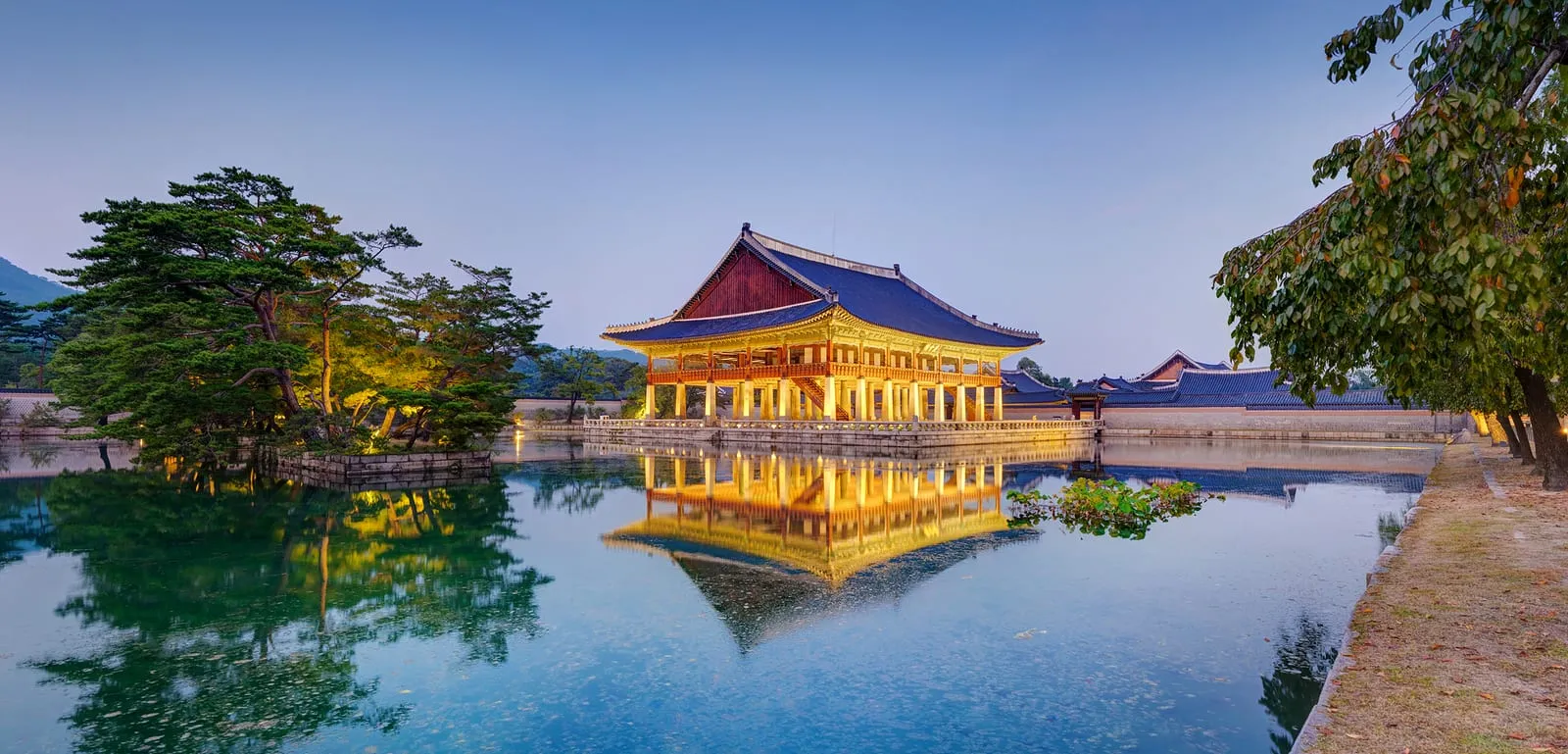
There is a version of a day in Seoul that goes like this.
You put on hanbok in the morning. You walk to the gate of a five-hundred-year-old palace, and you walk straight past the ticket window. Nobody charges you. You do it again at the next palace, and the next. At the last one — Deoksugung, which stays open until nine at night — you are still wearing it after dark, and the crowds have thinned, and the courtyard is quiet.
That day is free. All five palaces, every one of them, for the price of the clothes.
This is not a promotion or a seasonal event. It is written into the admission rules, listed alongside categories like state guests and registered guardians, in a line that reads simply: those wearing hanbok.
The question everyone asks next is whether it applies to foreign visitors. The Royal Palaces and Tombs Center answers that one directly on its own guideline page, and the reasoning is worth quoting because it explains the whole policy: the purpose of free admission for hanbok wearers is the popularisation and globalisation of hanbok, so it applies regardless of nationality.
So yes. The rule was designed with you in mind.
The part rental shops don’t always explain
Here is where people get caught. The palace does not assess whether your hanbok is expensive, traditional, or authentic. It assesses shape — and one requirement does most of the rejecting:
You must wear both a top and a bottom.
A jeogori (저고리, the jacket) and a skirt or trousers. Both. This sounds obvious until you look at what is actually for rent and what people actually choose.
What fails
| Outfit | Verdict |
|---|---|
| Jeans with a jeogori | No |
| Hanbok skirt with a T-shirt | No |
| A one-piece hanbok dress, no jeogori | No |
| A T-shirt-style modern hanbok top | No |
| A durumagi (overcoat) worn over regular clothes | No |
The one-piece case is the cruel one. Plenty of garments sold as hanbok are dresses — beautiful, comfortable, obviously hanbok-inspired. The guideline says a jeogori and a skirt are required, so the dress alone does not qualify.
The T-shirt-style top fails for the same underlying reason. The test for a jeogori is the overlapping front collar (여미는 깃) — the crossed panel that closes across the chest. If the top pulls over your head like a T-shirt, it has no overlapping collar, so it is not a jeogori, however hanbok-ish the fabric looks.
What passes, including things people assume won’t
This is the encouraging half, and it is more generous than the failures suggest.
Modern hanbok counts. The guideline states plainly that both traditional hanbok and saenghwal hanbok (생활한복, everyday or modernised hanbok) qualify. Age and authenticity are not the criteria. Shape is.
No ribbon ties needed. A jeogori without goreum — the long fabric ties — still counts. As long as the overlapping collar is there, how you fasten it is your business. Buttons, snaps, knots, all fine.
Zips and loose ankles are fine on trousers. Hanbok trousers traditionally have a wrapped waist and daenim ties at the ankle. Modern versions often have a zip and no ties. The guideline judges trousers by whether they approximate the sapok cut, so a zipped waist and bare ankles do not disqualify you.
Skirts are unrestricted in closure. Wrapped, unwrapped, either is accepted. A jeogori with a heorichima (허리치마, the high-waisted underskirt) qualifies — but with a condition the guideline attaches only to this case. The answer ends: 단, 저고리가 허리까지 내려와야 합니다 — the jeogori must come down as far as the waist. A cropped jeogori over a high-waisted underskirt is the combination to avoid.
Summer ramie counts if it otherwise meets the guideline.
There is one soft instruction attached to all of this: dress in a way that suits the dignity of a palace. Excessive exposure is discouraged. It is written as guidance rather than a measurable rule, which in practice means the staff at the gate exercise judgement.
What it actually saves you
Modest amounts. This is not the reason to do it.
Full price for all five sites bought separately is ₩9,000, and the combined ticket is ₩6,000 — so hanbok saves you less than the price of the rental. The point is what the day feels like, not the money.
We set out the full fee table, the combined-ticket arithmetic and every other free-admission category in a separate guide: Who gets into Seoul’s palaces free.
Two things that do matter here. Changdeokgung’s Huwon is excluded — hanbok does not get you in, and neither does the combined ticket. And the last Wednesday of every month is free for everyone, Huwon again excepted.
The mistake that ruins the day
Not the dress code. The closing days.
Gyeongbokgung and Jongmyo close on Tuesdays. Changdeokgung, Deoksugung and Changgyeonggung close on Mondays. People rent hanbok for the morning, photograph Gyeongbokgung, walk to Changdeokgung and find it shut — or the reverse.
There is a second layer to this that catches people who did check. When a closing day falls on a public holiday, the palace opens anyway — and the closure moves to the next non-holiday day. So a Monday holiday means Changdeokgung is open on the Monday and shut on the Tuesday, which is the day you had planned Gyeongbokgung, which is also shut on Tuesdays. On that one week, both halves of the usual plan fail. Check the calendar rather than the weekday.
Deoksugung and Changgyeonggung stay open until 21:00 year-round, which makes them the natural end of a hanbok day. Gyeongbokgung closes much earlier.
Full hours, seasonal bands and the order that works: Seoul’s five palaces.
What this article does not claim
We are not recommending rental shops, and we have not verified any shop’s claim that its garments qualify. The guideline is published by the Royal Palaces and Tombs Center; individual shops are not bound by it and may describe their stock loosely.
We also cannot promise how a specific outfit will be judged. The written rules are clear about tops, bottoms and collars, but the dignity clause is a matter of judgement made at the gate by staff, not by us.
If you want certainty, the safest combination is the plainest one: a jeogori with an overlapping collar, and a separate skirt or pair of trousers. That has never been the ambiguous case.
Read next
Book it or find it
Every link above is an affiliate link: if you book through one we may earn a commission, at no extra cost to you. We were not paid to write any of this and nobody reviewed it before publication but us.
Sources & last checked
- Public institution · checked 2026-08-24 한복무료관람 가이드라인 — 궁능유적본부, 국가유산청
- Public institution · checked 2026-08-24 관람요금 — 궁능유적본부, 국가유산청
- Public institution · checked 2026-08-24 관람시간 — 궁능유적본부, 국가유산청