Culture & History · Three Kingdoms to Joseon
Dancheong: Why Korean Palaces Are Painted Green and Red
The green, red and blue patterns under every palace eave are not decoration added for beauty. Dancheong began as weatherproofing for pine, became a way of announcing who was allowed to build in colour, and its rules were strict enough that the paint itself told you what kind of building you were standing in front of.
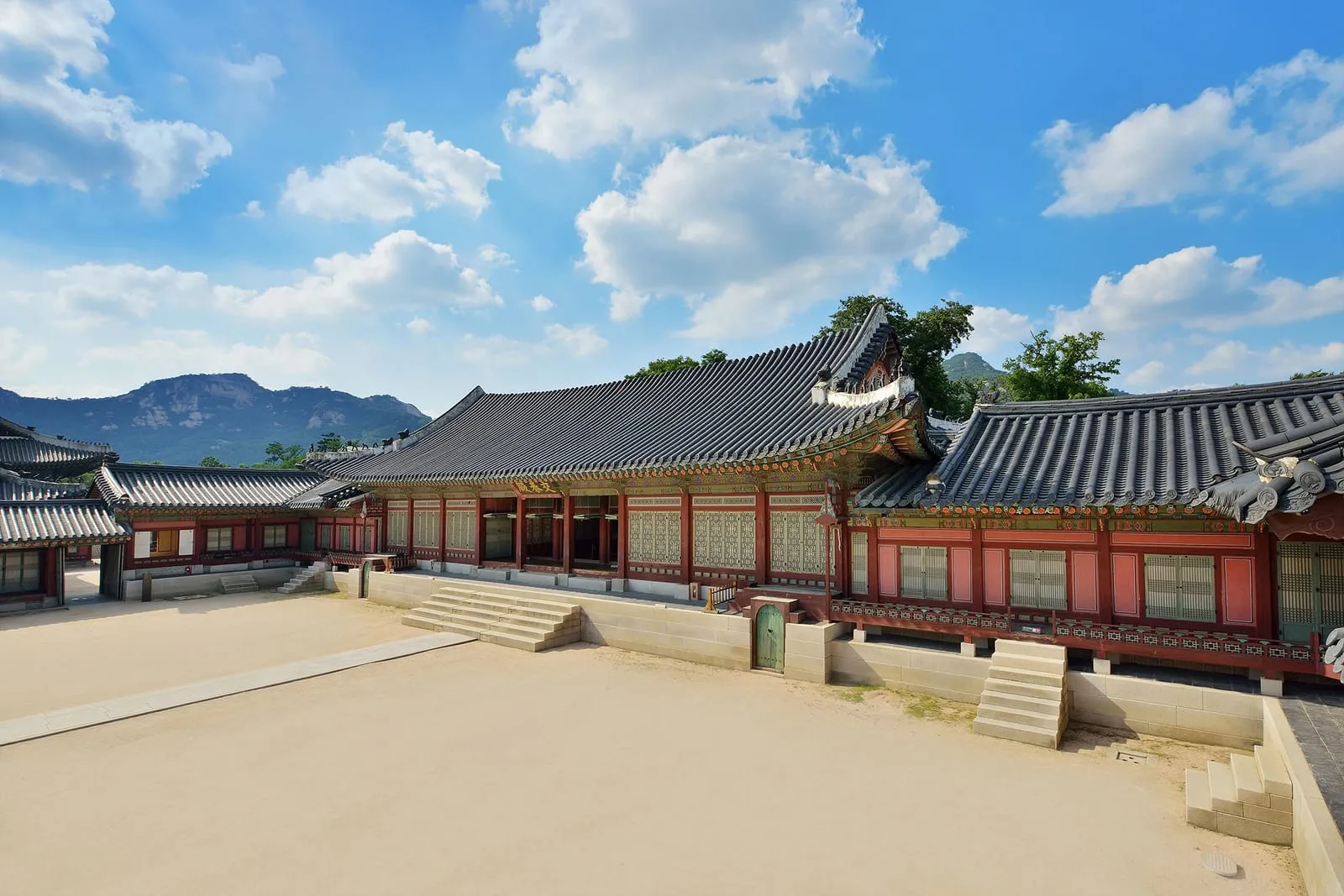
Stand under the eaves of any palace hall in Seoul and look up.
Most people do not. They photograph the roofline from thirty metres back and move on. But step in until the eave is directly overhead and the whole ceiling of the thing opens — green, vermilion, cobalt and white packed into every bracket and beam end, layer on layer, repeating with a precision that looks machine-cut and is not. It goes on above you for the entire length of the building.
This is dancheong (단청). Two thousand years of it stand over your head, and it did not start as decoration.
It began as weatherproofing
Korean traditional architecture is wood, and the wood is mostly pine. Pine is hard and it lasts, but its surface is rough and it cracks as it dries. Left bare and exposed to Korean weather — a wet summer, a dry freezing winter — the timber degrades.
So the first purpose of dancheong, the one the encyclopaedia lists before all others, is protection: shielding the wooden members from wind, rain, rot and the swing between damp and dry, to make the building last.
A second, more mundane purpose sits at the bottom of the same list: hiding the flaws. Knots, splits and blemishes in the timber disappear under paint.
That is the honest origin. Everything else was built on top of it.
Then it became a statement about power
Once you can paint a building, the question becomes who is allowed to, and how much.
The encyclopaedia sorts the purposes of dancheong into five, and two of them are about status rather than maintenance:
- Religious solemnity — temple architecture, where the painting marks sacred space and the dignity of ritual.
- Authority — palace architecture, where dancheong exists to display the absolute power of the throne.
That is a real distinction you can see with your own eyes. Temple dancheong and palace dancheong use overlapping techniques and different logic: the temple is announcing the sacred, the palace is announcing the king.
A fifth category covers commemorative buildings, painted in a style appropriate to whatever they were built to remember.
It is older than the palaces by a long way
The word itself is not Korean in origin. Its earliest recorded appearance is in the Huainanzi, compiled under Liu An in the Western Han, more than a century before the common era.
In Korea, the tradition can be traced through the tomb murals of Goguryeo, and it runs continuously from there through Goryeo and Joseon to the present day. When you look at a Gyeongbokgung eave you are looking at the late end of a line roughly two thousand years long.
The written record is thin but real: the Samguk Sagi and Samguk Yusa both carry material on it, as do Chinese sources including the Book of Rites and the Wen Xuan, and the Japanese Nihon Shoki.
What you are actually looking at
Two things help when you are standing in front of it.
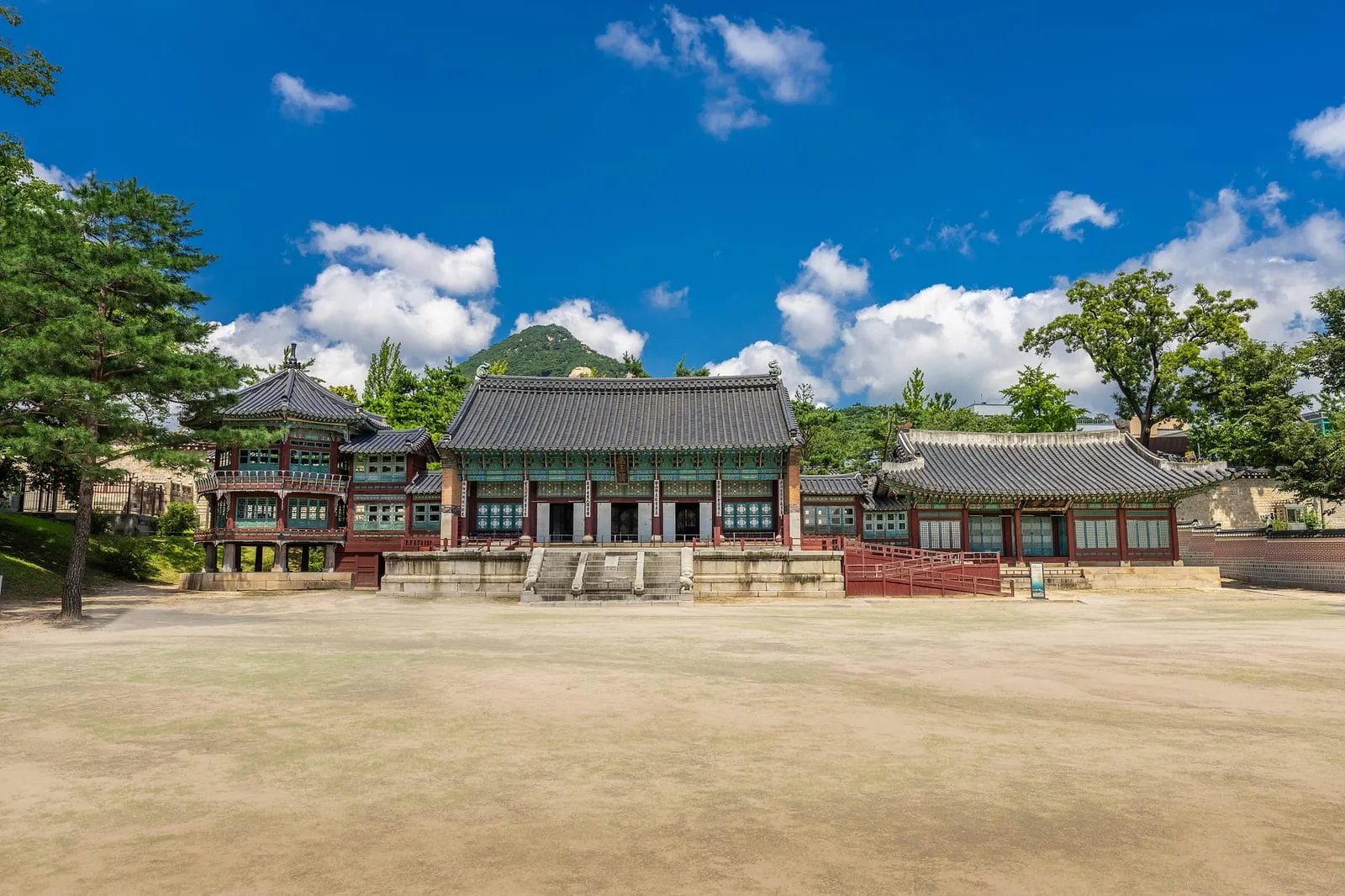
Density signals importance. The more elaborate and layered the pattern, the more significant the building. A throne hall is worked to the limit; a service building is plainer or left with a simple base coat. Walking Gyeongbokgung from Geunjeongjeon out toward the kitchens, you can watch the pattern thin out.
Base coat versus full pattern. The simplest treatment, gachil (가칠), is a plain coloured undercoat with no ornament. It still does the protective job. Everything beyond it is choice, and choice cost money and permission.
The craft survived because it was protected
Dancheong is not a lost art but it came close enough that the state intervened. Since 1972 the painters have been designated as holders of national intangible heritage, and today the designation operates at both national and provincial level.
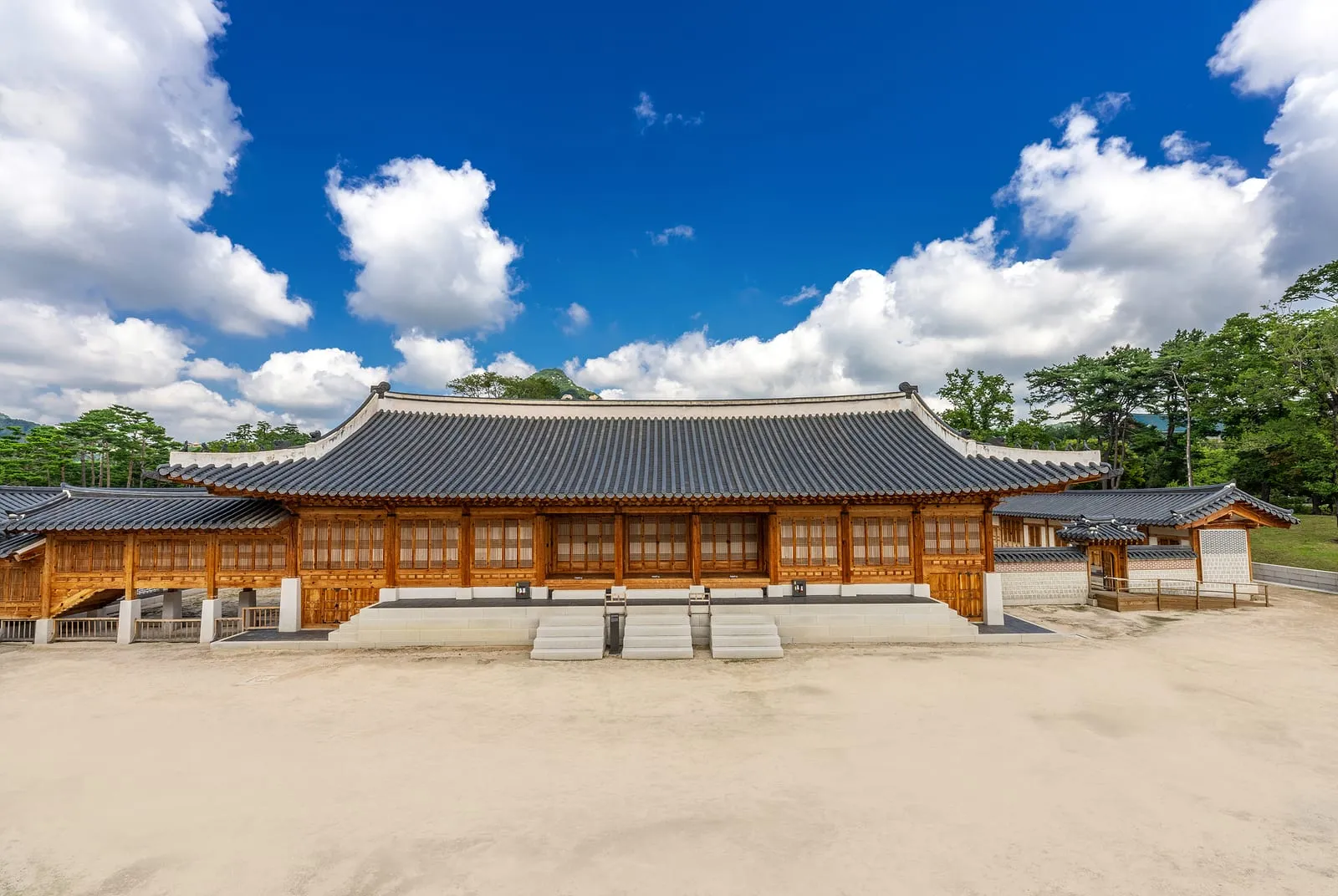
That is why the reconstructions you see — Jaseondang and Biheongak in the Donggung, rebuilt in 1999, and Heungbokjeon more recently — are painted rather than left bare. There are still people who know how.
If you want to see the range in one day, the five palaces run from Gyeongbokgung’s ceremonial density to Deoksugung’s Western stone.
What this article does not claim
We are describing the purposes and history of dancheong as set out by the Academy of Korean Studies. We are not attempting a technical account of pigments, patterns or regional schools, and we have not verified claims about the specific pattern vocabulary used on individual buildings at Gyeongbokgung.
If you want the detail, the encyclopaedia entry linked below is the primary source and goes considerably deeper than this page.
Read next
Sources & last checked
- Public institution · checked 2026-08-14 단청 — 한국민족문화대백과사전 (한국학중앙연구원)
- Public institution · checked 2026-08-14 단청장 — 한국민족문화대백과사전 (한국학중앙연구원)
- Public institution · checked 2026-08-14 관람코스 — 궁능유적본부, 국가유산청