Culture & History · Joseon (1392–1897)
Donggung: The Real East Palace Behind the Netflix Series
The Netflix series takes its name from a real place. Donggung was the crown prince's quarter of a Joseon palace, built to the east because east meant spring, and spring meant the heir. Parts of it you can still walk into. One of the most important halls is simply gone.
There is a boy in a courtyard, and three times a day the scholars come.
Morning, midday, evening — lectures on the classics, delivered to one student, in a hall named after sincerity of intention and a rectified mind. Officials sit in on them and report back. He is perhaps twelve. He will be king, and the entire apparatus of the state is watching to see whether he is turning out correctly.
That courtyard has a name, and it is the title of the show you are watching. Donggung (동궁, 東宮) was a real place — and the word carried two meanings at once: the buildings where the crown prince lived and worked, and the crown prince himself.
The logic behind the name is worth knowing, because it explains the layout of every Joseon palace you will ever visit. East is the direction of sunrise. In the cosmology the court used, east corresponded to spring — the season of beginnings, of what is coming next. The heir was what came next. So his quarters went east of the throne hall, and over time the place and the person became the same word.
It was never one building
Donggung is a district, not a house. The crown prince slept, studied, held audiences and conducted ritual in separate structures, and the arrangement differed between palaces.
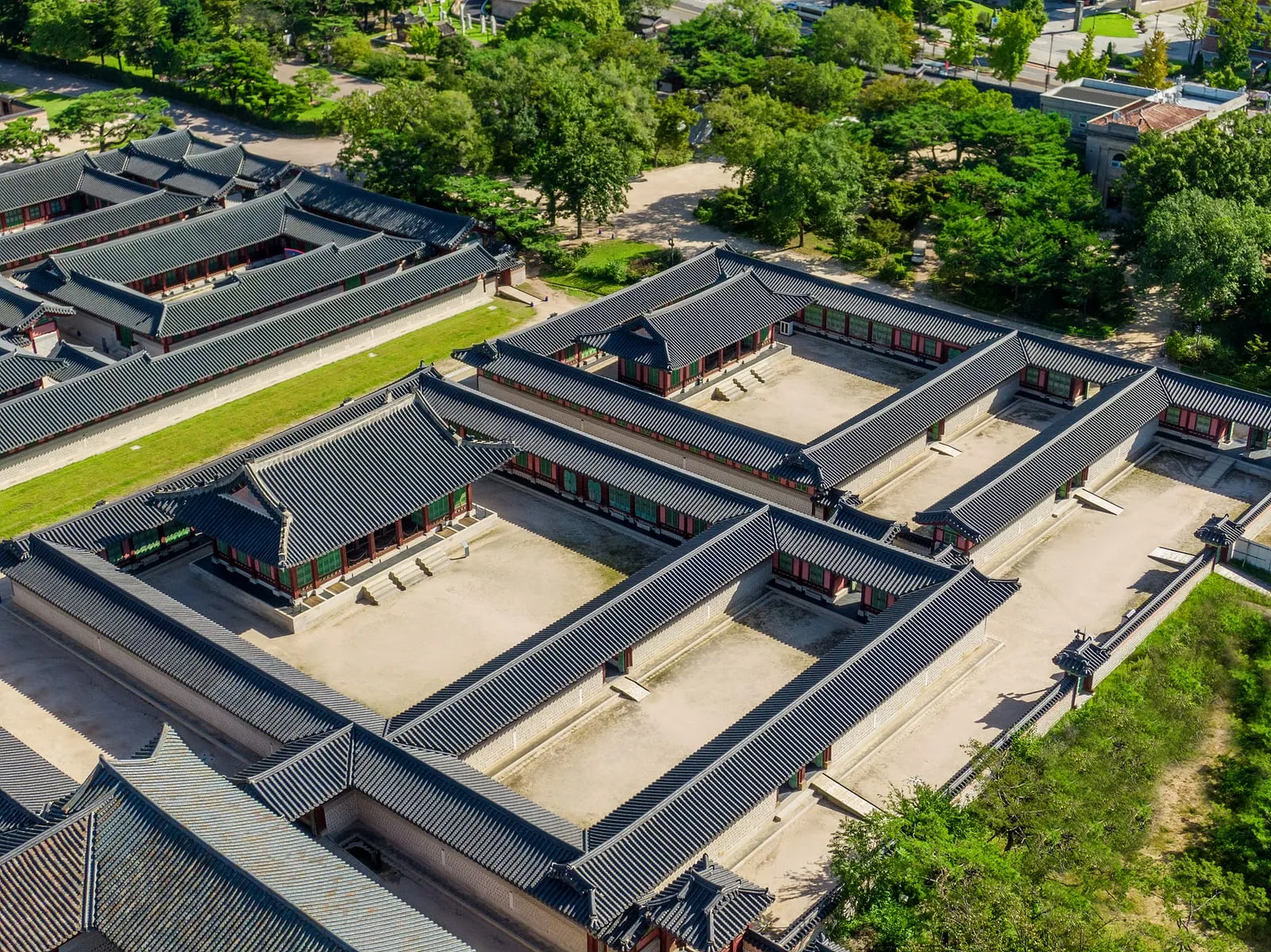
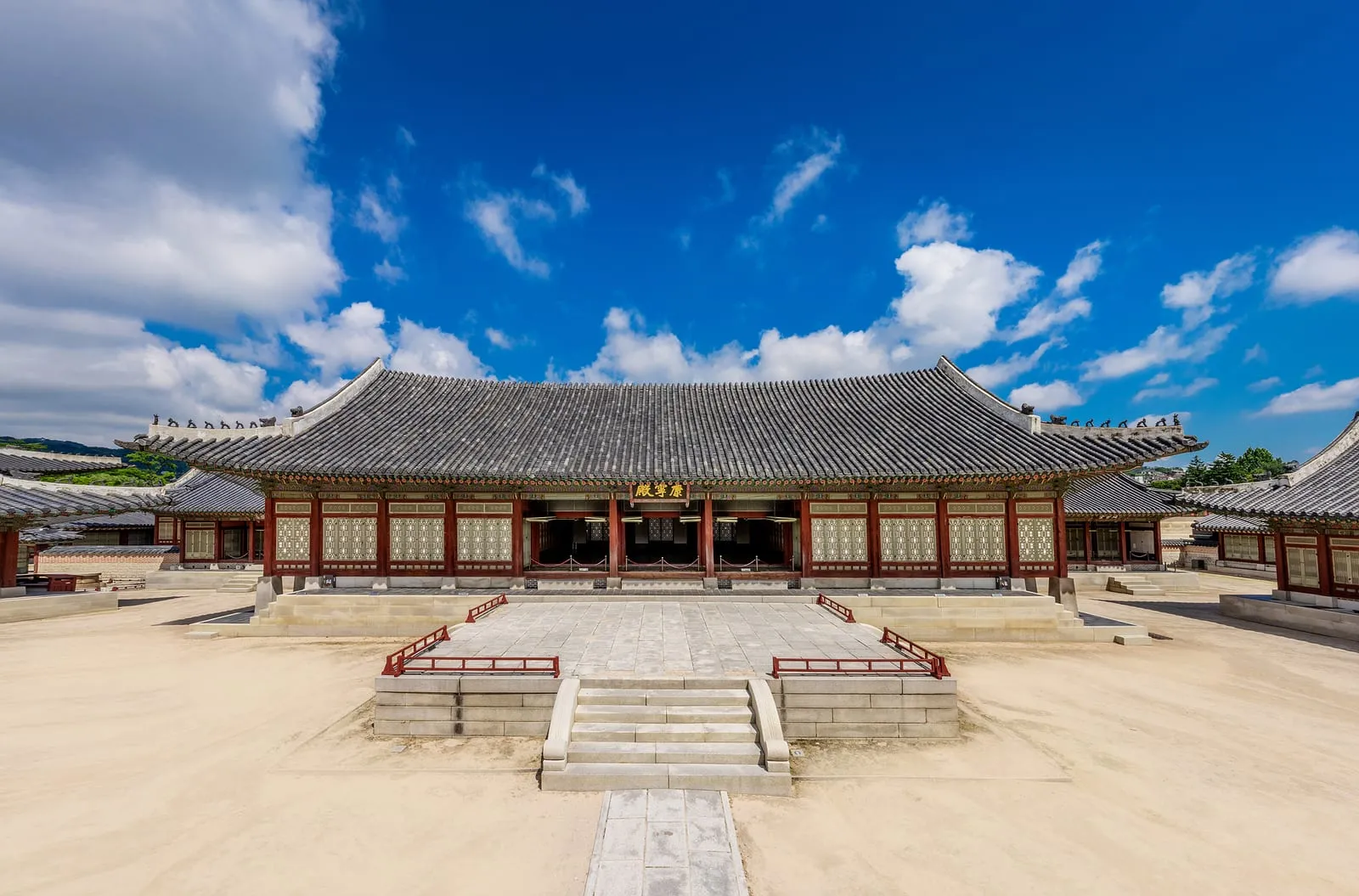
At Gyeongbokgung, the Donggung sits east of Geunjeongjeon, the main throne hall. Two buildings define it: Jaseondang (자선당) to the west, the living quarters of the prince and his wife, and Biheongak (비현각) to the east, where he worked. Both were destroyed during the Japanese colonial period and were rebuilt in 1999.
The photograph at the top of this page makes the point better than a paragraph can. What you are looking at is not a building — it is several halls, each with its own walled courtyard, laid out as a compound within the larger palace.
At Changdeokgung, the picture is more complicated, and more interesting.
The hall that is not there
The main hall of Changdeokgung’s Donggung was Junghuidang (중희당), built in 1782 under King Jeongjo. It stood near the southeastern corner of the palace, around the boundary with neighbouring Changgyeonggung.
It no longer exists.
This matters if you go looking for it. Visitors sometimes walk that stretch of Changdeokgung expecting the crown prince’s principal hall and find an empty platform and trees. The building is gone, and no reconstruction stands in its place.
What does survive is Seongjeonggak (성정각), southeast of Huijeongdang. This is where the crown prince studied — and “studied” understates it. He received seoyeon (서연), formal lectures on the Confucian classics, three times a day: morning, midday and evening. The name of the hall comes from the Great Learning, from the phrases seongui (성의, sincerity of intention) and jeongsim (정심, rectification of the mind). The building takes the first character of each.
Architecturally it is modest by palace standards — six bays across, two deep, with a hipped-and-gabled roof, two bays of wooden floor to the west, two rooms beside them, and a raised pavilion floor of three bays running north to south on the east side.
Why a study hall is the point
It is tempting to read Donggung as a residence. It functioned more like a school with a state attached.
A Joseon crown prince was not simply waiting. He was being formed, in public, on a schedule, under the eyes of officials whose job partly consisted of judging whether the formation was working. Three lectures a day, in a building named after sincerity and a rectified mind, is not decoration. It is the curriculum written into the architecture.
That is the tension worth carrying into any drama set in this space. The Donggung is the most watched address in the kingdom and the least free.
Visiting
Gyeongbokgung’s Donggung is the accessible one. From Geunjeongjeon the path splits three ways; the right-hand gate leads to Jaseondang and Biheongak. It is part of the standard route and needs no separate reservation.
| Season | Hours | Last entry |
|---|---|---|
| Jun–Aug | 09:00–18:30 | 17:30 |
| Mar–May, Sep–Oct | 09:00–18:00 | 17:00 |
| Nov–Feb | 09:00–17:00 | 16:00 |
Closed Tuesdays. If the Tuesday is a public holiday the palace opens, and the closure moves to the next non-holiday. Note that Changdeokgung closes Mondays, not Tuesdays — if you are doing both in one trip, this catches people out.
Changdeokgung’s Seongjeonggak is on the palace route as well. Go with the knowledge that you are seeing the study, not the seat.
One practical note that surprises most visitors: wearing hanbok gets you in free. The definition is stricter than rental shops explain, so read what actually counts as hanbok before renting rather than after. If you are 18 or under, or 65 or over, you do not need the hanbok at all — see who gets in free.
What this article does not claim
We do not know where the Netflix series was filmed. Online posts name several locations, but we have not found confirmation from the production or a public body, so we do not repeat them here. This article is about the historical Donggung, not the drama’s shooting locations.
If and when official confirmation appears, we will publish the locations separately and say who confirmed them.
Read next
Sources & last checked
- Public institution · checked 2026-08-13 창덕궁 성정각 — 한국민족문화대백과사전 (한국학중앙연구원)
- Public institution · checked 2026-08-13 세자궁 — 한국민족문화대백과사전 (한국학중앙연구원)
- Public institution · checked 2026-08-13 중희당 — 조선왕조실록 전문사전 (한국학중앙연구원 디지털인문학연구소)
- Public institution · checked 2026-08-13 관람시간 — 궁능유적본부, 국가유산청
- Public institution · checked 2026-08-13 한복 무료관람 가이드라인 — 궁능유적본부, 국가유산청