HANKUKIN Now
Jjimjilbang: What One Word Covers, and What It Costs
Korean law defines a jjimjilbang as a place for making you sweat, using heated magnetite, ochre or jade. It does not define it as somewhere to sleep. Meanwhile the same English word covers a ₩8,308 neighbourhood bath and a ₩58,000 resort spa, and the resort one closes at 22:00 and charges extra after six hours. Here is what is actually published, and what we could not find out.
This article contains affiliate links, marked where they appear. If you book through one we may earn a commission at no extra cost to you — how this works.
Every English guide gives you the same sentence. A jjimjilbang is a 24-hour Korean bathhouse where you can sleep for about ₩10,000.
Each part of that is true somewhere in Korea and false somewhere else in Korea, and the word does not tell you which one you are walking into.
What the law calls it
Start with the definition, because it is more interesting than the guides make it sound. Korea’s Public Health Control Act defines the business — 목욕장업 — in two limbs.
맥반석ㆍ황토ㆍ옥 등을 직접 또는 간접 가열하여 발생되는 열기 또는 원적외선 등을 이용하여 땀을 낼 수 있는 시설 및 설비 등의 서비스 Services providing facilities and equipment for sweating, using heat or far-infrared produced by directly or indirectly heating magnetite, ochre, jade and the like.
Public Health Control Act, art. 2(1)3(b) 공중위생관리법 제2조제1항제3호나목 31 July 2025
A national statute names three specific minerals. The first limb of the same clause covers plain washing in water; this second limb is the jjimjilbang, and it is defined entirely as a place that makes you sweat.
Now read the clause immediately above it. 숙박업 — the lodging business — is defined as services letting a guest sleep and stay. A jjimjilbang is not that. It is licensed as a bathhouse, and sleeping is something the country does there anyway rather than something the licence is for.
That distinction is not pedantry. It is why there is no check-in, no room that locks, and no obligation to have a bed free when you arrive.
One word, seven times the price
The government does run a price survey, and it is a good one — the Korea Consumer Agency publishes 목욕료, the entry price for a public bath, for every province every month. In the June 2026 release that is ₩11,000 in Seoul and ₩8,308 in the cheapest region.
But the survey has no line for a jjimjilbang. Its personal-services items are laundry, lodging, barber, salon and bath — and nothing else. This is why every English guide quotes a range with no source attached: there is no official figure to attach.
What there is instead is each operator’s own published rate. One large chain lists ₩26,000 for the sweat-spa, ₩48,000 for its water park, and ₩58,000 for a pass covering both.
So the honest version of the sentence is: a neighbourhood bath is under ₩11,000 and is a real thing to do; a resort spa is two to five times that. Both get called a jjimjilbang in English.
The two rules that catch people
From the same operator’s published information, read on 22 August 2026:
| Sweat-spa opening hours | 10:00 – 22:00 |
| Included time | 6 hours |
| After that | ₩5,000 per hour |
It closes at ten at night. The “24-hour” line in the guides describes one kind of establishment — the older, cheaper, neighbourhood kind — and does not describe the modern resort spa at all. If you arrive at nine in the evening planning to stay the night, you have about an hour.
And the ticket is not open-ended. Six hours, then metered. Most bathing places in the world charge you once and let you drift; this one has a clock.
We are not presenting either figure as national. They are one operator’s rules, on one date, and we are naming the operator so you can check them. The point is not the numbers — it is that the numbers exist and vary, which the single English word hides.
When Koreans actually go
Here is the part that changes how you should schedule it.
Naver publishes search interest for any keyword by month. For 찜질방 across the last thirteen months, with the peak month set to 100:
| January | 100 |
| December | 79 |
| February | 76 |
| October | 62 |
| June | 32 |
January runs three times June. This is a winter thing. Koreans do not think of it as a spa treatment available all year; they think of it as what you do when it is cold outside.
On the same scale, 사우나 peaks at 48 — the jjimjilbang is more than twice the search interest of the plain sauna. And 세신, the vigorous scrub-down that foreign visitors talk about most, never rises above 4.4. Even Koreans are not searching for it.
That seasonality lines up with something we wrote earlier: a Korean winter is a season of moving between heated rooms, because the temperature hovers near freezing rather than sitting far below it. The bathhouse is not an escape from the winter. It is the shape of the winter.
Going in the afternoon
Most visitors already have a hotel. That makes the sleeping question irrelevant and the daytime question the real one — and the daytime answer is good.
At Seoul’s surveyed price of ₩11,000, a public bath costs about the same as a bowl of naengmyeon and slightly more than seven subway rides. For that you get two or three hours indoors on a cold afternoon, in a building where nobody is hurrying you and nothing needs to be booked.
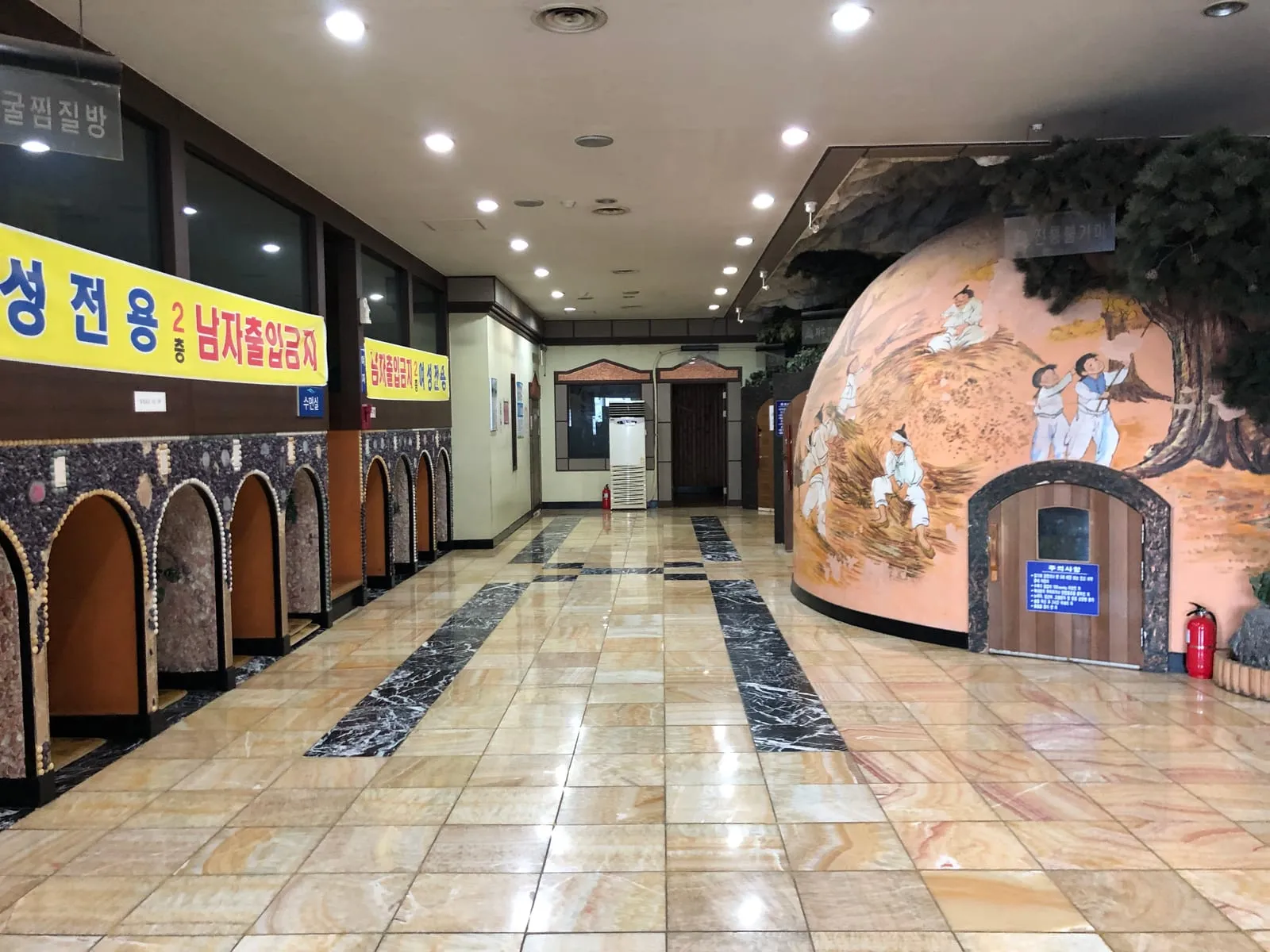
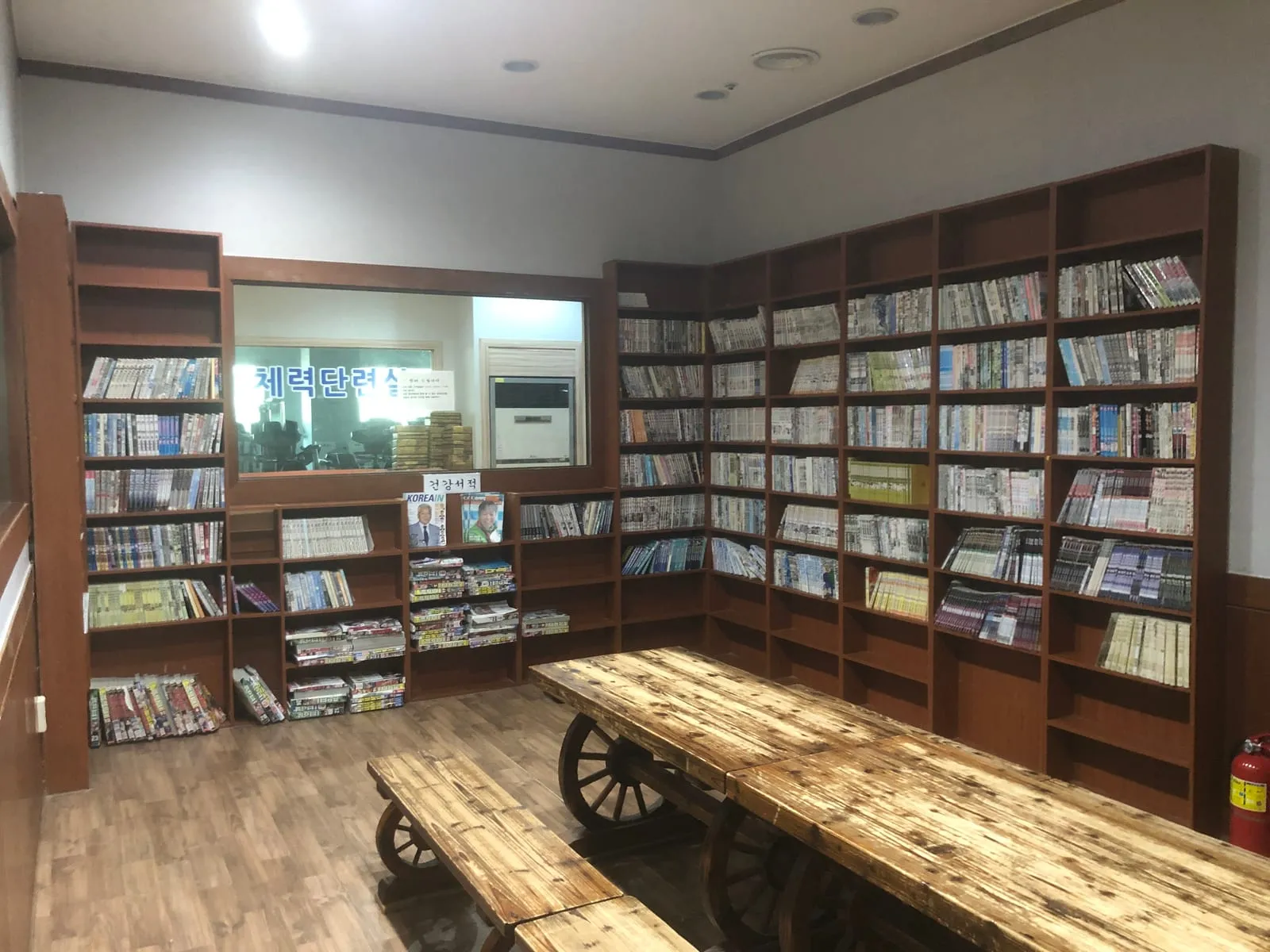
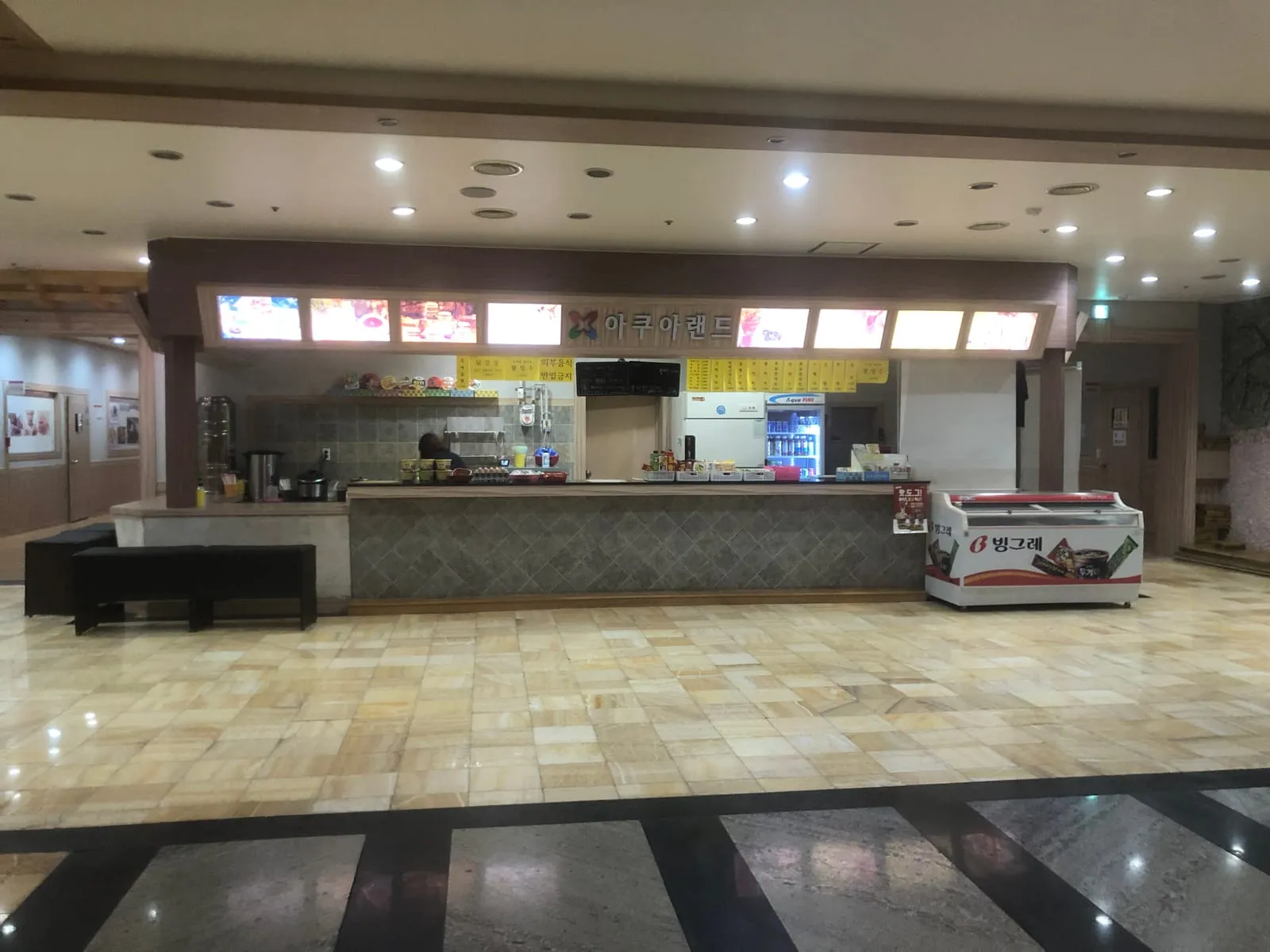
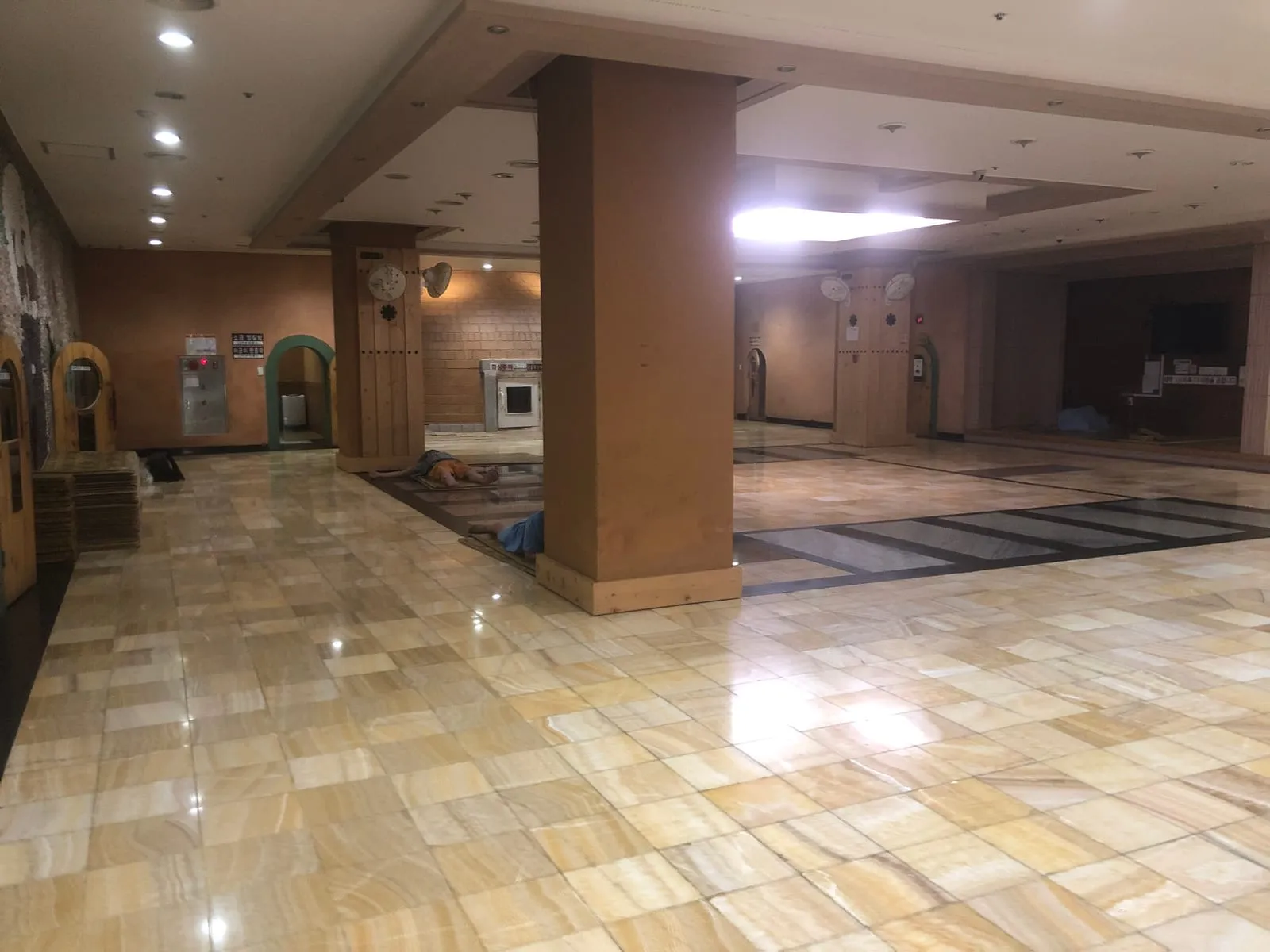
And the building is not only heated rooms. The photographs on this page are from two ordinary establishments in and near Wonju, and what is in them is a comic library, a row of massage chairs, an arcade, and a snack counter.
Two structural things worth knowing before the door:
The bathing floor and the sweating floor are different places with different rules. The baths are single-sex and unclothed — that is what the law’s first limb describes, and the regulations require men’s and women’s changing and bathing rooms to be run separately. The sweating rooms are the other limb: everyone is in the same cotton uniform, and they are mixed.
You wash before you get in the water, not in it. This is not etiquette advice invented for tourists; it is how the room is laid out. The showers face the wall and the tubs are for sitting in afterwards.
The one you can book, and why that is awkward
We should be straight about a gap between what this article recommends and what it is possible to sell you.
The ₩11,000 neighbourhood bath cannot be booked online at all. There is no ticket, no listing, no English page. You walk in and pay at the desk. That is most of what makes it the answer, and it is also why nobody has ever put an affiliate link on it.
What can be booked is a step up: the large jjimjilbang at Dongdaemun, in the GoodMorning City building, which sells an admission ticket through Klook. We read its page on 22 August 2026, and it is the one useful thing on this page for the two questions we could not otherwise answer — the operator lists a seshin (body scrub) programme, and names sikhye and roasted eggs by name. It also runs 24 hours, stores luggage, and sits where you are probably already shopping.
The rule to know before you buy it: once you go in, you cannot go out and come back. No re-entry. For an afternoon plan that includes lunch somewhere else, that is the sentence that matters, not the price. Outside food and alcohol are not allowed in either, minors need a guardian, and a lost key is ₩20,000.
That link at the foot of this page is the only commercial one here, and we get a commission if you use it. It has not changed the recommendation above — if you want the ordinary thing, walk into the ordinary place and pay ₩11,000.
What we could not find out
This article is thinner than we would like, and we would rather show you the holes than paper over them.
We have no temperatures. We wanted to tell you that one room is 50°C and another is 80°C, because that is the thing a first-time visitor actually wants. Operators publish room temperatures inside photographs, not as text, and we do not print numbers we have read off a picture.
We have no order of operations from a source we trust. Bath first or sweat first, and how long to stay in — every blog has an answer and none of them cite anything. We are not going to add a sixth version.
We could not confirm the youth curfew. It is widely reported that under-19s may not enter between 22:00 and 05:00 without a guardian, and we believe it is real, but the clause sits in an annexe to the enforcement rule that is published as a downloadable file rather than as readable text. Until we have opened it, we are not stating it as law.
We could not confirm anything about tattoos. Some establishments refuse entry to visibly tattooed customers. Whether that is regulation or house policy, we could not establish, and for a visitor with tattoos it is the single most useful thing on this page — so its absence is a real gap, not a rounding error.
Every price here is one reading on one date. The Consumer Agency figure is the June 2026 release; the operator’s rates were read on 22 August 2026 and that operator runs different rates in high season. Check before you rely on either.
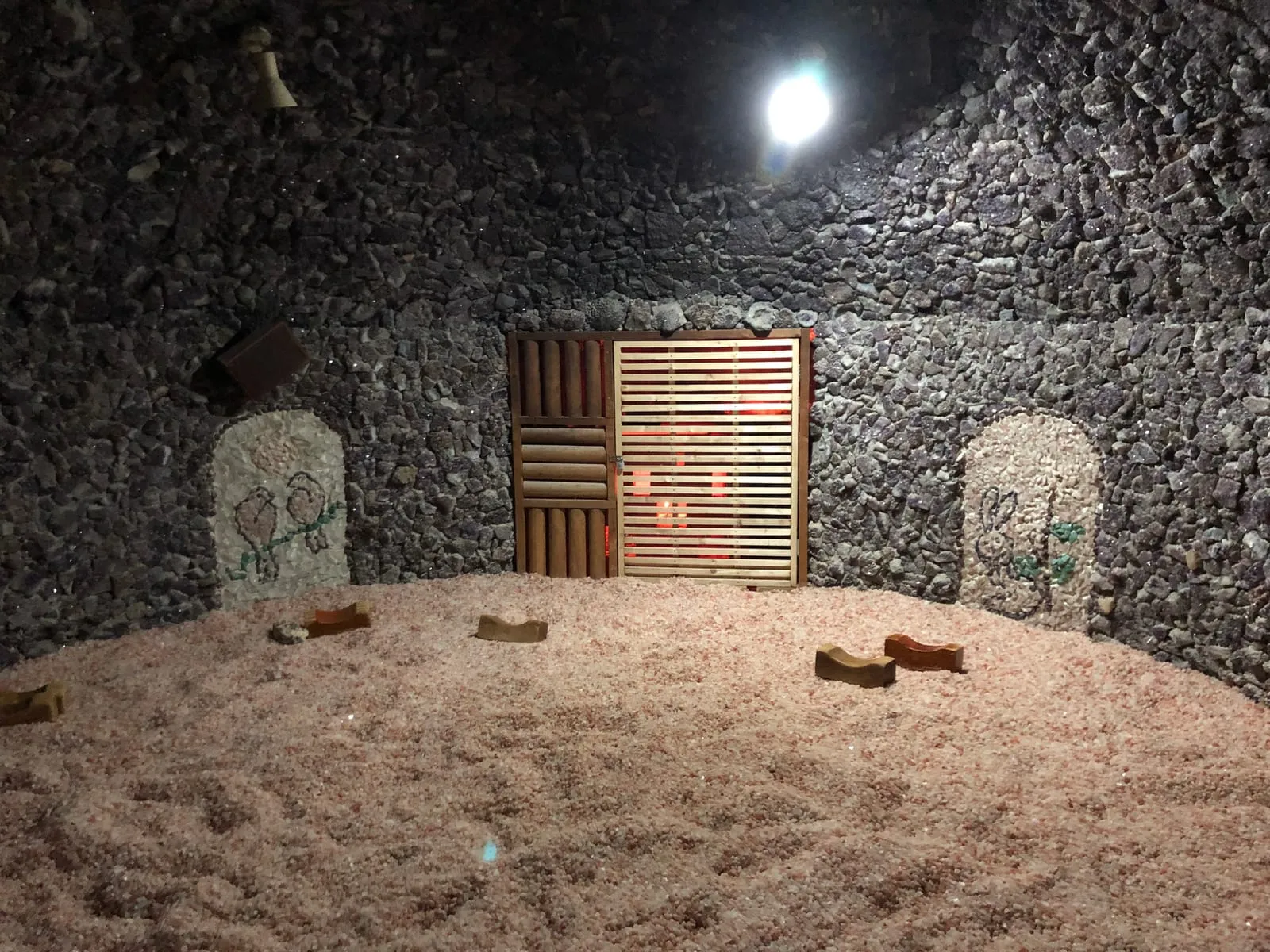
The photographs are somebody else’s, from 2020, of two specific places. Korea’s tourism board photographs parks, palaces and markets; its collection had no bathhouse in it at all, because these are private businesses. The pictures here came instead from Wikimedia Commons, released to the public domain by their photographer, and they show two ordinary establishments in and near Wonju in 2020. They are not the place you will walk into, and a resort spa charging ₩26,000 looks nothing like them.
One thing the photographs settle, though. Look at the room with the salt floor, and at the low door into the domed kiln. Whatever you were picturing when you read “Korean sauna”, it was probably not that.
Related
- Where snow actually falls in Korea — why Korean winter is an indoor-outdoor season
- What eight everyday Korean meals cost — the same survey, and where the ₩11,000 sits against lunch
- What Seoul transport actually costs — the other number worth carrying
- Every problem we cover, with one-line answers
Read next
Book it or find it
Every link above is an affiliate link: if you book through one we may earn a commission, at no extra cost to you. We were not paid to write any of this and nobody reviewed it before publication but us.
Sources & last checked
- Public institution · checked 2026-08-22 공중위생관리법 제2조 — 국가법령정보센터 (definition of 목욕장업: water bathing, and sweating by heated magnetite, ochre or jade)
- Public institution · checked 2026-08-14 개인서비스요금 — 한국소비자원 참가격 (bath entry by region, June 2026 release)
- Merchant official site · checked 2026-08-22 아쿠아필드 이용안내 — published rates, opening hours and the six-hour limit
- Public institution · checked 2026-08-22 네이버 데이터랩 검색어 트렌드 — monthly search interest for 찜질방, 사우나, 세신, Aug 2025 to Aug 2026
- Merchant official site · checked 2026-08-22 · we earn a commission if you book here Seoul Dongdaemun GoodMorning City SPAREX — Klook product page (24-hour operation, no re-entry, seshin package, sikhye and roasted eggs)