HANKUKIN Now
When Does It Snow in Korea? Where It Actually Falls
Last winter Mokpo on the south-west coast got 61.7cm of snow. Seoul got 21.6cm. Pohang, on the east coast, got zero — none at all. Korea's snow does not fall where visitors expect it to, and the reason is the Yellow Sea. Here is the meteorological agency's own data and what it means for planning a winter trip.
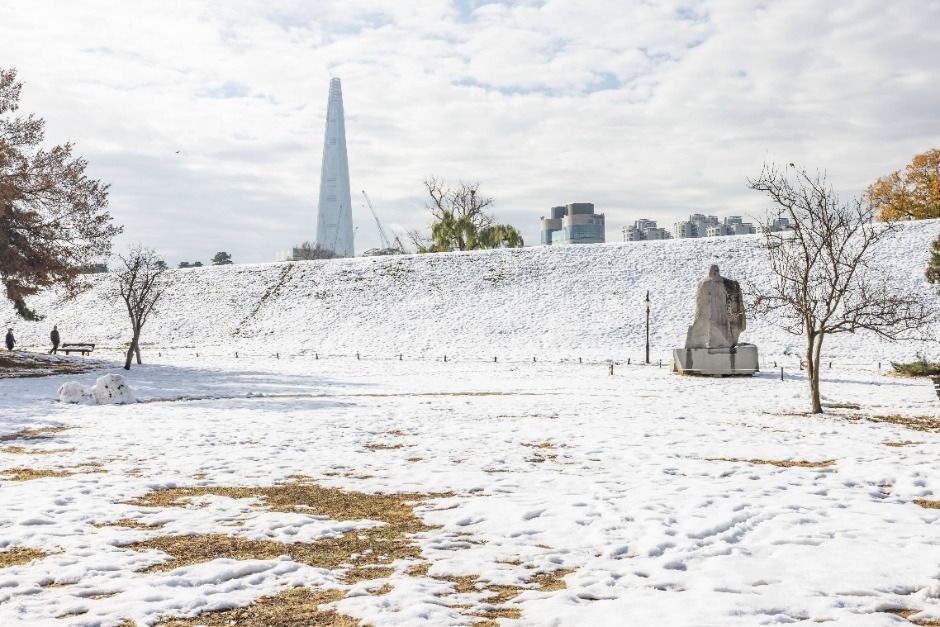
If you are picturing a Korean winter, you are probably picturing Seoul under snow — palace roofs white, someone in a long coat, breath in the air.
That picture is not wrong, but it is the wrong place. Korea’s snow does not fall where a visitor would guess, and the gap is not small.
The numbers that reorder the map
The Korea Meteorological Administration publishes a seasonal climate report each year. These are its figures for the 2025–26 winter, with the deviation from the 30-year normal in brackets.
| Snow that fell | vs normal | |
|---|---|---|
| Mokpo (south-west coast) | 61.7 cm | +19.4 |
| Seoul | 21.6 cm | −0.9 |
| Pohang (south-east coast) | 0.0 cm | −7.4 |
Read that again. Mokpo got nearly three times as much snow as Seoul. Pohang, a city of half a million on the east coast, got none at all.
Working backwards from the deviations, the 30-year normals sit near 42 cm for Mokpo, 22 cm for Seoul and 7 cm for Pohang — so this is not a freak year. It is the ordinary pattern, slightly exaggerated.
Why the south-west, of all places
The mechanism is the same one that buries cities on the far side of the Great Lakes, and once you know it the map makes sense.
Cold, dry air pours out of Siberia across the Yellow Sea, which is comparatively warm. The air picks up moisture crossing the water and dumps it as snow when it hits land — which means the west coast and the Honam region in the south-west take the heaviest falls, while the east coast sits in the lee of the Taebaek mountains and stays dry.
So the practical rule is the opposite of the intuitive one. For snow, look west and south-west. For sun in winter, look east.
When, exactly
Korea’s snow season is December to February, and the country as a whole saw 14.5 days with snow in 2025–26, close to the normal of 15.9 days.
That figure is worth pausing on. Fifteen snow days across an entire winter, averaged over thirteen observation stations, is not a country buried in snow. It is a country where snow arrives, sits for a day or two, and goes.
December is the weakest of the three months more often than people expect. In 2025 it produced just 1.7 cm nationally — 6.5 cm below normal and the fifth-lowest December on record — because the month was warm enough that the precipitation fell as rain.
If you are choosing dates purely for snow, January is the safer bet than December.
Last winter was a thin one, and that is a pattern
Two figures from the same report deserve attention if you are planning ahead.
Total snow was 14.7 cm against a normal of 26.4 cm — barely more than half. And the agency’s own headline notes this was the second consecutive winter with winter precipitation at about half the normal level.
The winter average temperature was 1.1°C against a normal of 0.5°C. Warmer air means more of the same weather system arrives as rain rather than snow.
Two years is not a trend, and we are not going to call it one. But if your plan depends on snow lying on the ground on a specific date, treat that as a gamble rather than a schedule.
What a Korean winter actually feels like
The temperature number above is the one that surprises visitors more than the snow.
A national winter average near 0.5°C means Seoul spends the season hovering around freezing rather than far below it — cold enough that snow settles when it comes, mild enough that it often does not stay long. What makes it feel colder than the number is the wind: dry, continental, and constant.
The practical consequence is that Korean winter is an indoor-outdoor season. Streets, markets and palace grounds are perfectly walkable; you simply move between heated rooms more often than you would elsewhere. This is the season when a bathhouse at ₩11,000 stops being a curiosity and starts being a plan.
If you are choosing dates
For snow on the ground: January, and go west or south-west. Mokpo, Jeonju, the Honam region generally. Gangwon’s mountains hold snow longest because of altitude, which is why the ski resorts are there.
For a bright, dry winter: the east coast. Pohang recorded zero snow last winter and its 30-year normal is around 7 cm. Busan and Ulsan are similarly dry and several degrees milder.
For Seoul specifically: expect a handful of snow days rather than a white season. If snow in the city is the point of the trip, build the trip around something else and treat snow as a bonus.
The other seasons
- Spring — when the cherry blossom actually opens, and why the window is about a week
- Summer — how hot Korea gets and why the nights are the problem
- Autumn — when the colour peaks, and why it moves the opposite way to blossom
All four on one chart: the month-by-month calendar.
What this article does not claim
These are one winter’s figures plus the 30-year normals implied by their deviations. The three-city comparison is from the 2025–26 season as published by the KMA. We derived the normals by subtracting the stated deviation from the stated value — that is arithmetic on the agency’s own numbers, not a separate dataset.
Thirteen stations is the national picture, not your itinerary. The KMA’s national snow figures are averaged over thirteen observation points (Bukgangneung, Seoul, Incheon, Suwon, Cheongju, Daejeon, Pohang, Jeonju, Ulsan, Gwangju, Busan, Mokpo, Yeosu). Mountains and inland valleys behave differently from all of them.
We have not covered the ski resorts, which sit at altitude in Gangwon and make their own snow. Their season does not track the lowland figures above.
No forecast is implied. Nothing here predicts the coming winter. It describes what the last one did and what the long-run averages are.
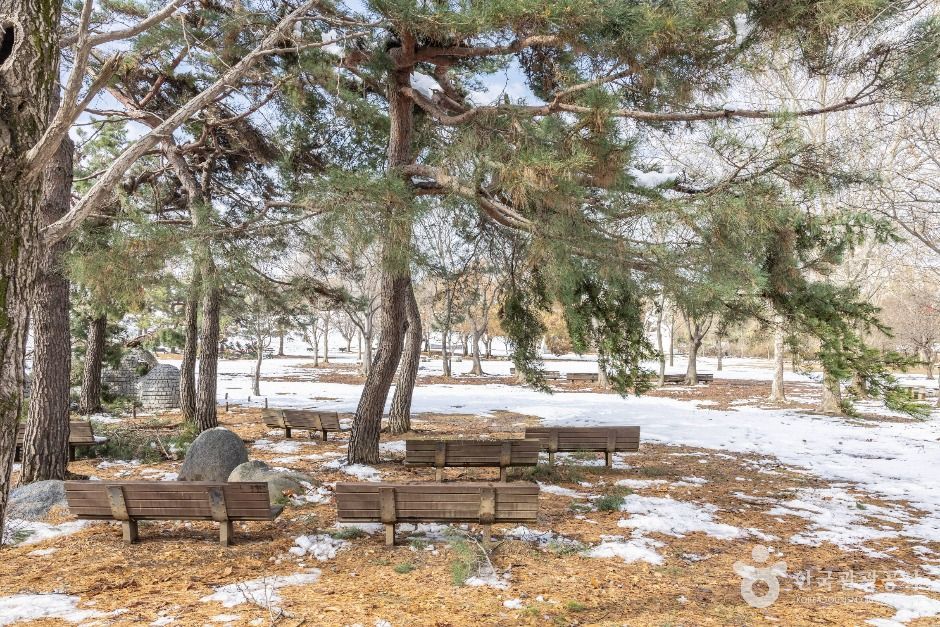
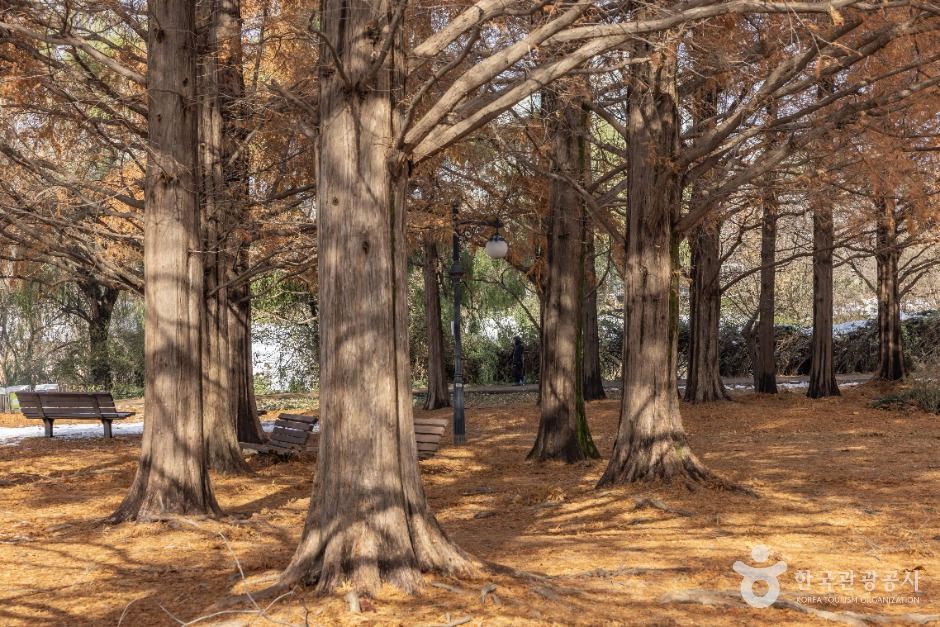
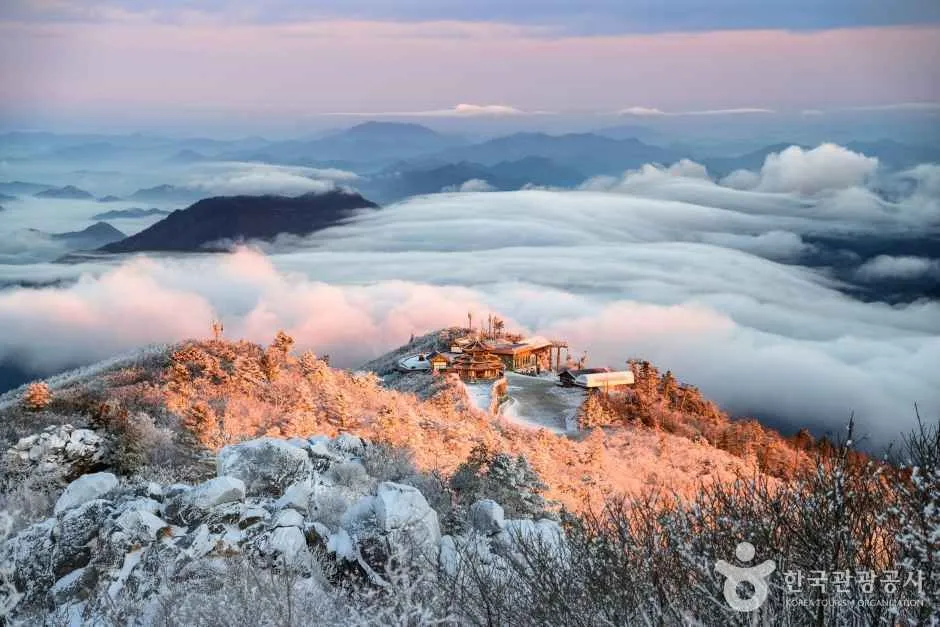
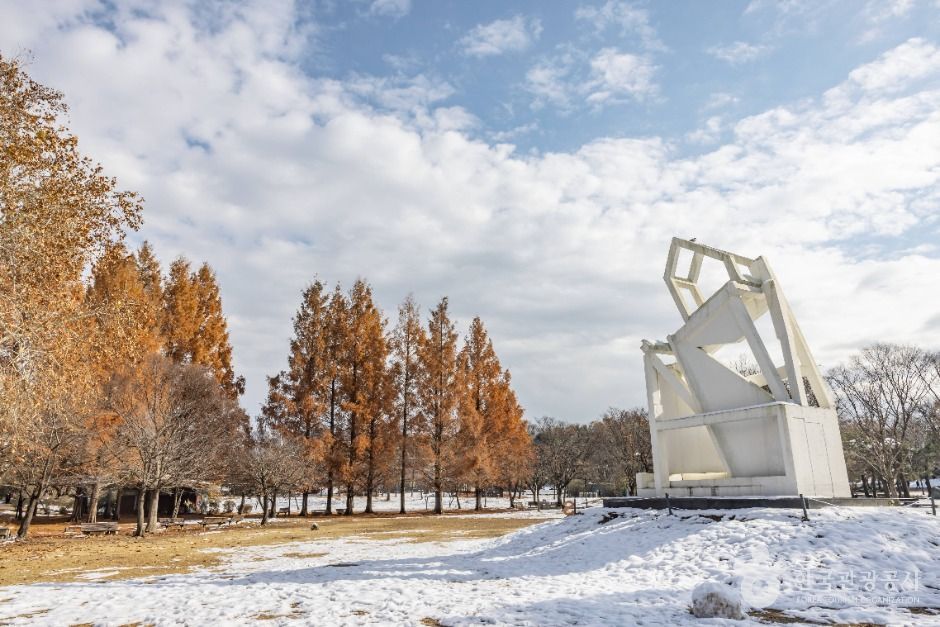
All the winter photographs on this page are from one park — Olympic Park in eastern Seoul — because that is the snow photography we could source under a licence that permits commercial use. They show what Seoul snow looks like, not what Mokpo snow looks like.
Read next
Sources & last checked
- Public institution · checked 2026-08-15 [2025년 겨울철 기후특성] 2년 연속 겨울철 강수량 평년의 절반 수준 — 기상청 보도자료
- Public institution · checked 2026-08-15 한국 지역별 기후특성 — 기상청 날씨누리