HANKUKIN Now
When Do Cherry Blossoms Bloom in Korea? And How Long
Korea's cherry blossom season is not a month. It is roughly a week per location, moving north from Jeju in late March to Seoul in early April, and it has been arriving earlier than it used to. These photographs are the same riverside path — one in bloom, the rest after. That gap is the part nobody plans for.
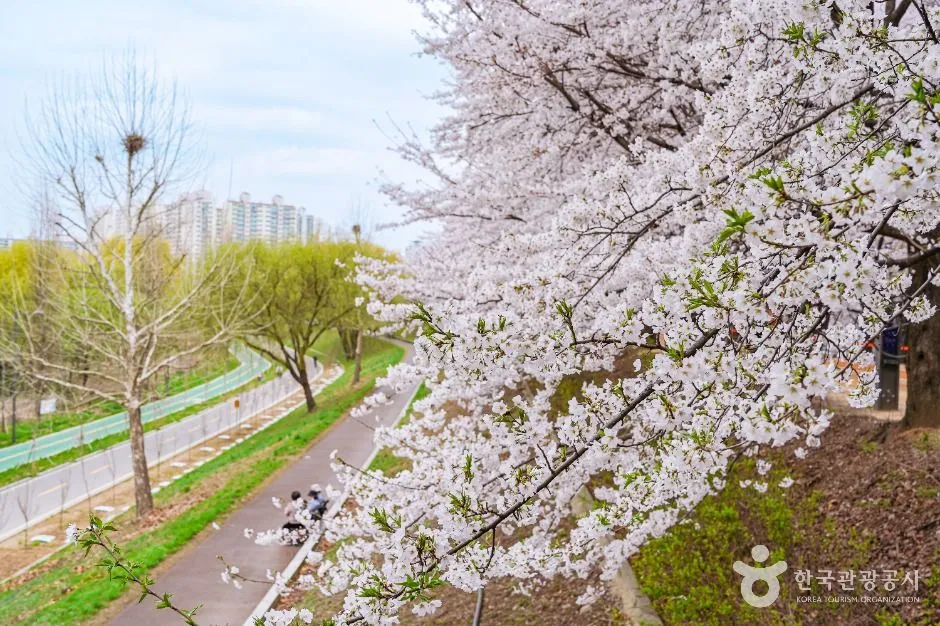
Every photograph you have seen of Korean cherry blossom was taken during a window of about a week.
That is the whole problem with planning a trip around it, and almost nobody says it out loud. The pictures make the season look like a condition the country is in for a month. It is not. It is an event that happens at each place, briefly, and then is over.
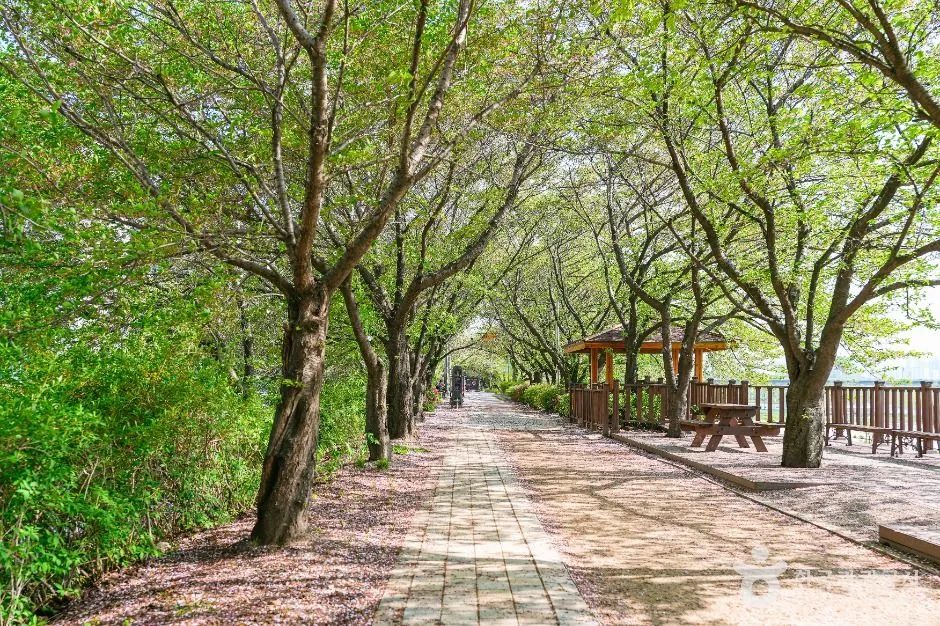
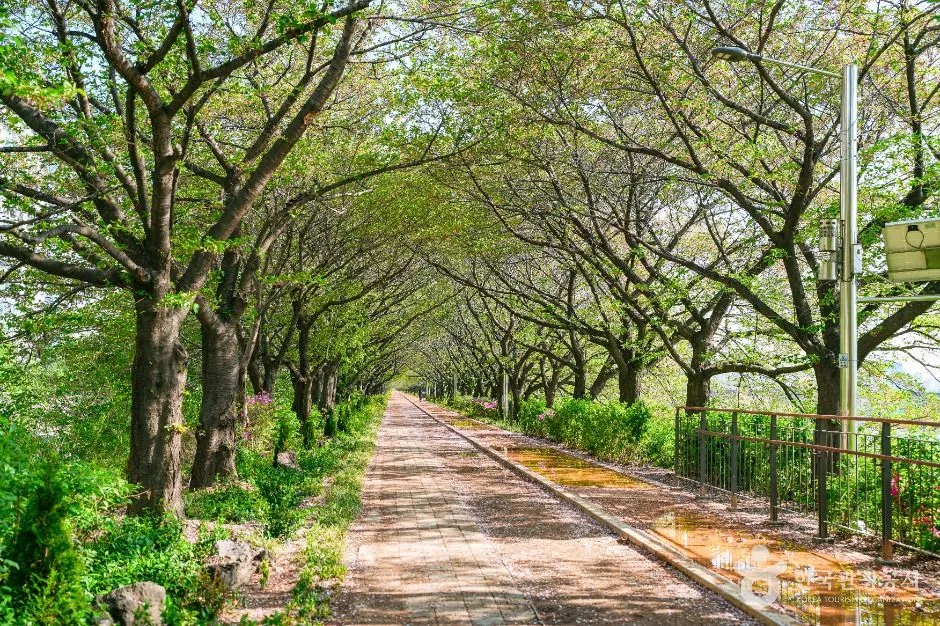
Here is the same path, photographed in both states.
The shape of the season
Cherry blossom moves south to north, because it follows temperature. The sequence is consistent even though the dates are not:
Jeju and the far south coast first — usually late March. Then Busan, Gyeongsang and Jeolla. Then the centre — Daejeon, Daegu. Seoul and the capital region last, usually in the first half of April. Mountains and the north-east run later still.
So the country does have roughly three weeks of cherry blossom somewhere. Any single city has about one.
This is also why “cherry blossom season in Korea” as a phrase misleads. If you are booking Seoul, the south’s dates are no use to you. If you are travelling the country, you can chase it northwards and see it twice.
It is arriving earlier than it used to
This part is documented rather than anecdotal.
The Korea Meteorological Administration recalculates its seasonal observation normals every ten years — the dates on which plants flower, cicadas first sing, frost and ice first appear, averaged across thirty years. When it published the 1991–2020 set, the release was titled, plainly, “Spring flowers bloom earlier, cicadas sing earlier.”
Compared with the previous 1981–2010 normals, spring flowering dates moved earlier by a small number of days — a shift measured in days, not weeks, but consistent across species and in one direction.
The practical consequence for a visitor is not that the season has moved somewhere new. It is that advice written a decade ago now points slightly late, and older guidebook dates should be treated as the outer edge of the window rather than the middle of it.
How to plan for a one-week event
Do not book on last year’s dates. They move by several days in either direction depending on how warm February and March were.
Watch the forecast, which is published each March. Korea’s cherry blossom forecast — city-by-city predicted first-bloom dates — is issued in early spring and updated as the season approaches. Check the year you are travelling.
Understand the vocabulary, because the forecast uses three stages and they are days apart:
| Korean | Meaning | What you would see |
|---|---|---|
| 개화 (gaehwa) | first bloom | Three or more flowers open on a sample tree. Mostly bare branches |
| 절정 / 만개 (manggae) | full bloom | The photograph you have in your head. Usually about a week after first bloom |
| 낙화 (nakhwa) | falling | Petals down. Beautiful, brief, and not what you booked for |
The date you want is full bloom, not first bloom. Guides that quote a single date usually quote the first-bloom figure, which is roughly a week early. Arriving on the first-bloom date and leaving four days later is the classic way to miss it entirely.
Build a fallback into the itinerary. If you are in Korea for two weeks and the blossom is late, go south; if it is early, go north or up. Altitude buys you several days — the same species flowers noticeably later on a mountain than at the river below it.
Where Seoul goes
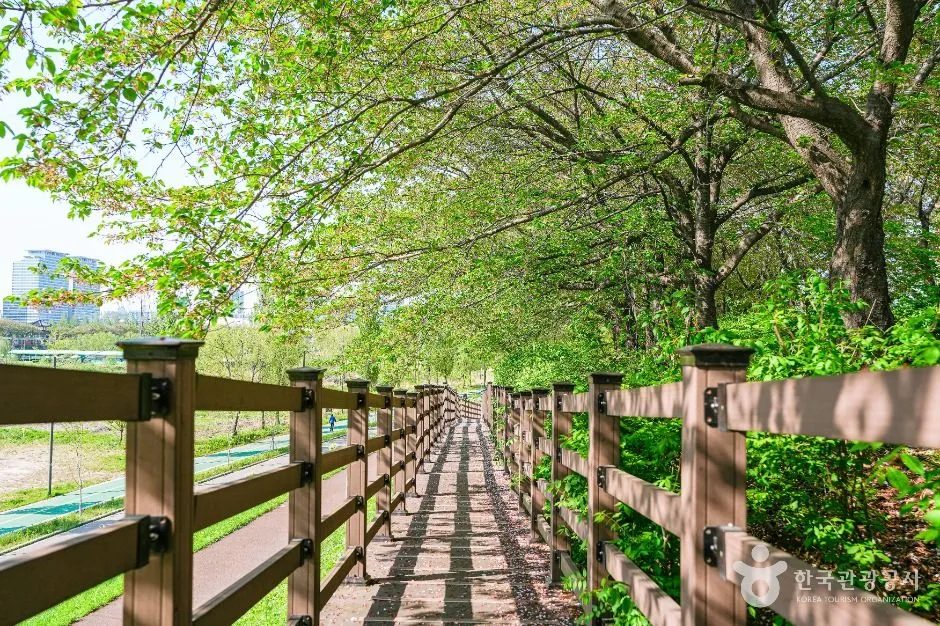
Seoul’s blossom is not concentrated in one place. It runs along rivers and embankments all over the city, which is why residents rarely travel far for it.
The photographs on this page are from the Anyangcheon embankment path in the west of the city — a working riverside walk rather than a destination, and typical of what Seoul actually has. The named spots draw crowds without blooming any earlier.
If you are choosing between a famous location and the nearest river to where you are staying, on a one-week window the nearest river is usually the better decision.
The other three seasons
Spring is the shortest window Korea has, but it is not the only one worth timing.
-
Summer — how hot it actually gets, and why the nights are the problem rather than the days
-
Winter — when it snows and where, which is not where most visitors expect
-
Autumn — when the colour peaks, which runs north to south, the opposite way to blossom
All four on one chart: the month-by-month calendar.
What this article does not claim
We do not give city-by-city bloom dates, and this is deliberate.
The Korea Meteorological Administration’s seasonal-observation normals are published as attachments to its releases rather than as a readable table, and the versions we could reach did not extract cleanly enough to quote. We would rather give you no date than a date we could not read properly — a bloom date that is three days wrong is worse than no date at all when the window is seven days long.
What we can source cleanly is the direction of the change: the KMA’s own 1991–2020 release states that spring flowering has moved earlier than the previous normals, and that release is linked above.
The annual forecast is issued by private weather companies, not by the KMA itself, and their figures are forecasts rather than observations. We have not evaluated their accuracy.
“About a week” is a description of the pattern, not a guarantee. Weather during the bloom — rain, wind, a warm spell — shortens or extends it, and a single storm can end it in a day.
All the photographs here are from one location in Seoul. They show what a Seoul riverside path looks like in and out of bloom; they are not representative of Jeju, Jinhae or the mountains.
Read next
Sources & last checked
- Public institution · checked 2026-08-15 봄꽃 빨리 피고, 매미 울음도 일찍 들려 — 기상청 보도자료 (국가기후데이터센터, 2021-09-13)
- Public institution · checked 2026-08-15 계절관측 자료 — 기상자료개방포털, 기상청