HANKUKIN Now
Korea Autumn Foliage: When It Peaks, and Where to Be
Korean autumn colour moves in the opposite direction to cherry blossom — it starts in the north-east mountains in late October and works south, reaching Naejangsan in the south-west in the first week of November. The Forest Service publishes predicted peak dates each year. Here is what they mean, and why 'peak' has a precise definition most guides never mention.
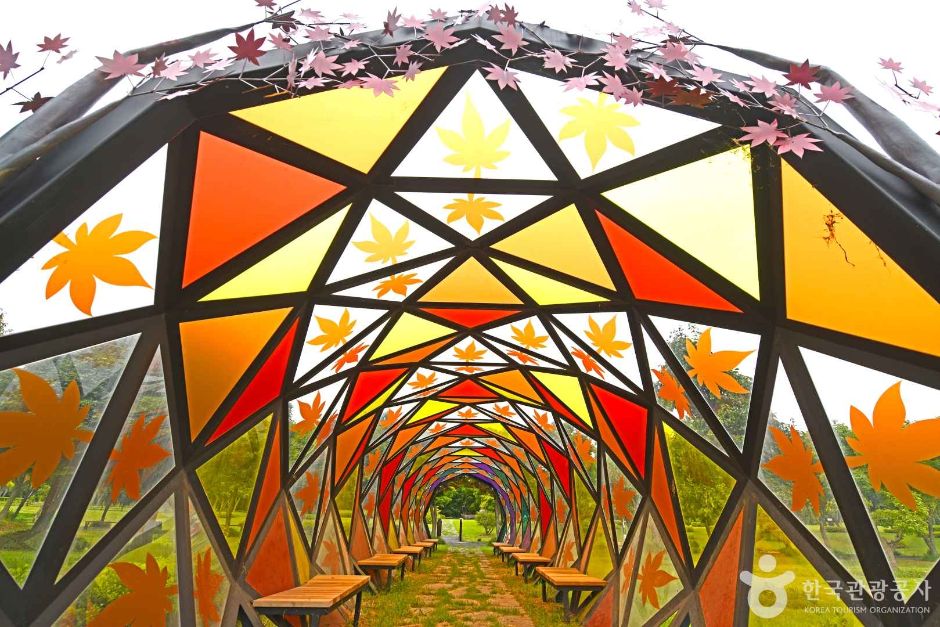
Korean cherry blossom travels south to north. Autumn colour travels north to south, and it also travels downhill.
That single fact reorganises an autumn itinerary, and almost no English guide states it plainly. If you are in Korea for two weeks in late October and the colour has not arrived where you are, you do not wait. You move south, or you move down the mountain.
What “peak” actually means
This is the definition that makes the forecast usable, and it is worth committing to memory.
절정 (jeoljeong), “peak”, means the mountain is at least 50% coloured. Not the first red leaf. Not the best single tree. Half the mountain.
There is a second term you will see in Korean forecasts:
| Korean | Meaning | Timing |
|---|---|---|
| 첫 단풍 (cheot danpung) | first colour | When roughly 20% of the summit has turned |
| 절정 (jeoljeong) | peak | When roughly 50% or more has turned |
First colour runs about two weeks ahead of peak. So a headline in mid-October saying “autumn colour has begun at Seoraksan” is not an instruction to book a flight — it is a two-week warning.
And the colour starts at the summit and moves down. A mountain announced as “beginning” is red at the top and green at the trailhead, which is why the observation is made at the peak rather than the car park.
The order, and why it is that order
Autumn colour follows falling temperature, and Korea cools from the north-east — where the mountains are highest and the continental air arrives first.
Seoraksan in Gangwon goes first, in the last week of October. Songnisan in the centre follows almost immediately, a couple of days behind. Then there is a gap of more than a week before Naejangsan in the south-west peaks in the first week of November, with Gayasan in the south-east last, around the second week.
That gap in the middle is the useful part. The north and the south are not two days apart; they are about two and a half weeks apart. A trip planned around Seoraksan and a trip planned around Naejangsan are different trips in different months.
It has been arriving later
The direction of the change is the opposite of spring’s, and both point the same way.
Spring flowering in Korea has moved earlier over recent decades; autumn colour has moved later. Warmer autumns delay the temperature drop that triggers the colour, so the leaves hold their green further into November.
The practical effect is the same as with cherry blossom: older guidebook dates now point slightly early for autumn, in the same way they point slightly late for spring. If a guide written in 2015 tells you late October for a southern mountain, treat that as the front edge of the window.
How to plan it
Book the region, not the date. Autumn colour is more forgiving than cherry blossom because the whole country takes about a month rather than a week — but any single mountain still has a good window of roughly ten days.
If you have one week, come in late October and start north. Seoraksan and the Gangwon mountains, then move south as it fades. This is the direction the season itself is travelling, so you are following it rather than chasing it.
If you can only come in November, go south-west. Naejangsan, Jeonju, the Honam region. Early November there is what late October is in Gangwon.
Use altitude the way you would use latitude. On the same mountain, the summit turns roughly a week or two before the valley floor. If you arrive and the trailhead is still green, the colour is above you — go up. If the summit is already bare, it is below you — go down.
Check the forecast for the year you are travelling. The Korea Forest Service issues predicted peak dates each September, and the KMA’s seasonal observation page reports first colour as it is actually observed at each mountain.
Where Koreans actually go
Four mountains carry the reputation, but they are not the only options and they are extremely crowded at peak.
Naejangsan (내장산), Jeonbuk — the country’s most famous foliage destination, largely for one maple-lined avenue leading to Naejangsa temple. Peaks in the first week of November. Expect crowds proportional to the fame.
Seoraksan (설악산), Gangwon — the first to turn and the most dramatic terrain. Late October. The cable car to Gwongeumseong reduces the walking considerably.
Songnisan (속리산), Chungbuk — central, close to Seoul by comparison, peaks within days of Seoraksan.
Gayasan (가야산), Gyeongnam — the latest of the four, mid-November, and home to Haeinsa temple and the Tripitaka Koreana woodblocks. If your dates are late, this is the one that still works.
And the cities. Seoul’s ginkgo avenues turn a hard yellow in the first half of November, about a week or two after the mountains near it. If your trip is city-based, you do not have to leave to see autumn — you just see a different autumn.
The other three seasons
- Spring — when the cherry blossom opens, and why the window is about a week
- Summer — how hot it gets, and why the nights are the problem
- Winter — when it snows and where, which is not where you would guess
All four are drawn together on one page: the month-by-month calendar.
What this article does not claim
The dates in the chart are one year’s forecast, not a schedule. They are the Korea Forest Service’s predicted peaks for the 2025 season. Peak dates move by several days each year with September and October temperatures. Use the chart for the order and the intervals — north-east first, south-west roughly two and a half weeks later — and check the current year’s forecast for actual dates.
We have not verified the 20% and 50% thresholds against a primary Korean Meteorological Administration document. They are the definitions used consistently in Korean forecasting and reporting. The 50% peak definition is stated in the Forest Service reporting linked above.
“Autumn colour has been arriving later” is a direction, not a measured rate. We have not sourced a per-decade figure we are confident enough to print, so we have not printed one.
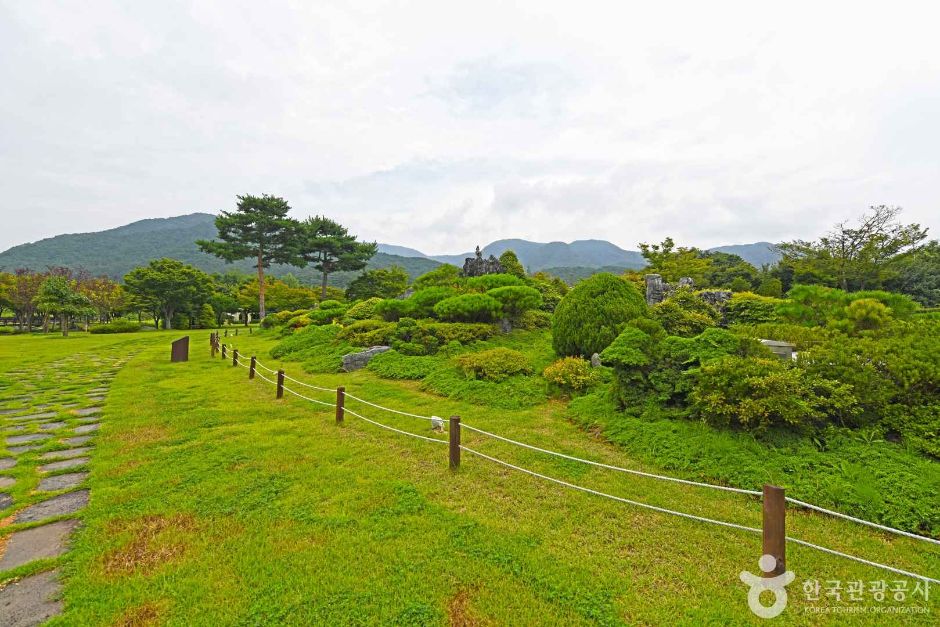
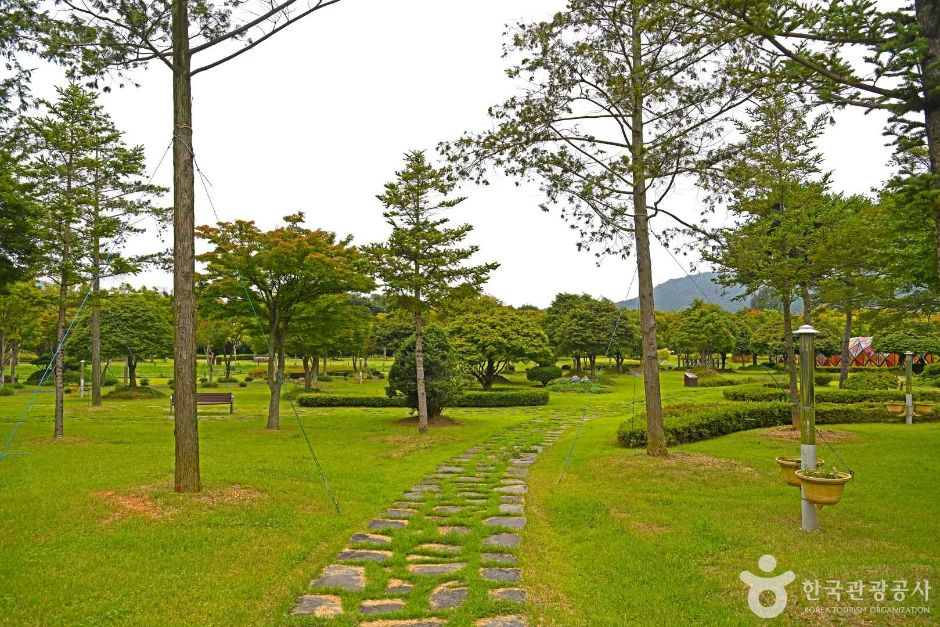
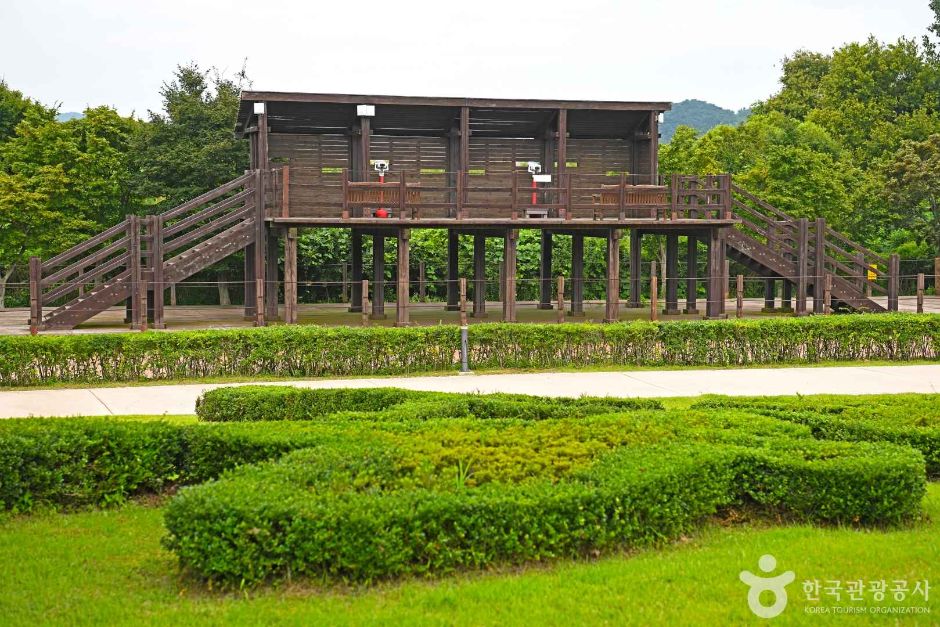
None of the photographs on this page show autumn colour. They show Naejangsan’s Maple Ecology Park in summer, and a maple-leaf pavilion built there. We could not source photographs of Korean foliage at peak under a licence that permits commercial use, and we would rather show you the right place in the wrong season than the wrong place in the right colours. Several searches returned green hillsides that merely had “maple” in the place name.
We have not covered access, fees, parking or transport for these mountains. National park entry, shuttle buses and temple admission all vary; treat this as a timing article, not an itinerary.
Read next
Sources & last checked
- Media · checked 2026-08-15 산림청 단풍 절정 예측 — 설악산 25일·속리산 27일 (2025년 가을)
- Public institution · checked 2026-08-15 단풍 관측 — 기상청 날씨누리 계절관측