HANKUKIN Now
Korea in Summer: How Hot It Gets and Where Koreans Go
Seoul had 46 tropical nights in the summer of 2025 — nights that never dropped below 25°C — the most since records began in 1908, and three and a half times the normal. Korean summer is not warm, it is tropical, and most visitors arrive without knowing. Here are the official figures, and what Koreans themselves do about it.
Here is one number, and it does more work than a paragraph of description.
In the summer of 2025, Seoul recorded 46 tropical nights. A tropical night, in Korean meteorological usage, is one where the temperature never falls below 25°C between evening and morning. Forty-six of them — the most since Seoul’s records began in 1908, and about three and a half times the 30-year normal of 12.5.
That is the part visitors miss. They plan for hot days. Korean summer’s actual difficulty is that the night does not cool down.
The official numbers
From the Korea Meteorological Administration’s report on the 2025 summer, published September 2025.
| 2025 | vs 30-year normal | |
|---|---|---|
| National average temperature | 25.7°C | +2.0°C — hottest on record |
| Heatwave days (max ≥33°C) | 28.1 days | +17.5 days |
| Tropical nights (min ≥25°C) | 15.5 days | +9.0 days |
| Seoul tropical nights | 46 days | normal is 12.5 |
Monthly: June 22.9°C (+1.5, a record), July 27.1°C (+2.5), August 27.1°C (+2.0).
Two details give the scale better than the averages do. Daegwallyeong — a mountain pass at around 800m, the place Koreans go to escape heat — recorded a heatwave for the first time since observations began in 1971. And tropical nights, which normally start in mid-July, began on 19 June in Gwangju and Daejeon, the earliest ever recorded at 21 stations.
2025 was an extreme year. But it was the second record-breaking summer in a row — 2024 held the previous high — so treat these as the shape of a Korean summer rather than a freak.
The rain does not cool it down
The monsoon season, 장마 (jangma), usually runs from late June into late July. In 2025 it was shorter than normal with fewer rain days, and what fell came as concentrated downpours on narrow bands of the country while other regions went into drought.
This matters for planning because the intuition is wrong. Rain in Korean summer does not bring relief; it brings humidity. A wet July day at 27°C is harder work than a dry one at 30°C, and the sky closes in for hours rather than clearing after a storm.
What Koreans do: eat something boiling
This is the part that makes no sense until you have lived through it.
On the hottest days of the year, Koreans queue for samgyetang — a whole young chicken stuffed with rice and ginseng, served in broth still bubbling. The principle has a name: 이열치열 (iyeol-chiyeol), “fight heat with heat.”
The days are fixed by the traditional calendar — the three bok days (초복, 중복, 말복) fall between roughly mid-July and mid-August — and on each of them the samgyetang restaurants have lines out the door in 33°C heat.
It costs ₩18,154 in Seoul on the Korea Consumer Agency’s June 2026 survey, which makes it one of the most expensive everyday dishes in the country. Nobody minds. (The full price table is in what food costs in Korea.)
Whether it physiologically works is beside the point. It is a national habit performed on a schedule, and joining it is the closest a visitor gets to being inside a Korean summer rather than enduring it.
Where to go instead
The answer to a Korean August is not to stay in Seoul and suffer. It is to do what Koreans do, which is leave for water.
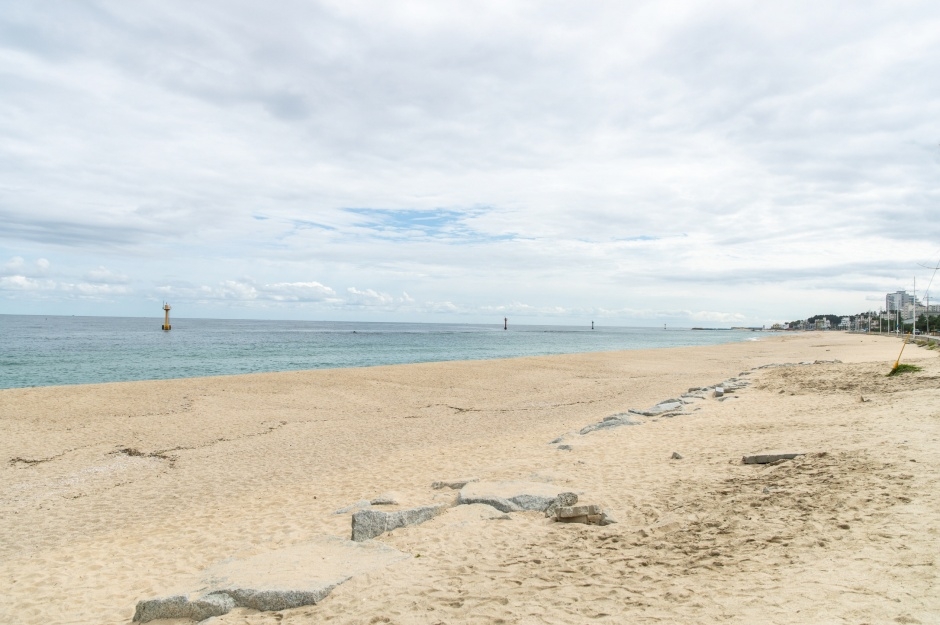
The East Sea coast. Gangneung, Sokcho, Jumunjin. The water is colder than the south coast, the beaches are wide, and the coast runs several degrees cooler than the inland cities. Jumunjin is about two hours from Seoul by KTX plus a local bus — the route is in the Goblin filming location guide, which is on the same beach.
Valleys (계곡). This is the domestic option foreigners rarely hear about. Mountain streams in Gangwon, Gyeongsang and Jeolla run cold all summer, and the standard Korean summer day is to sit in one with your feet in the water and food on a rock. National park valleys are free to enter.
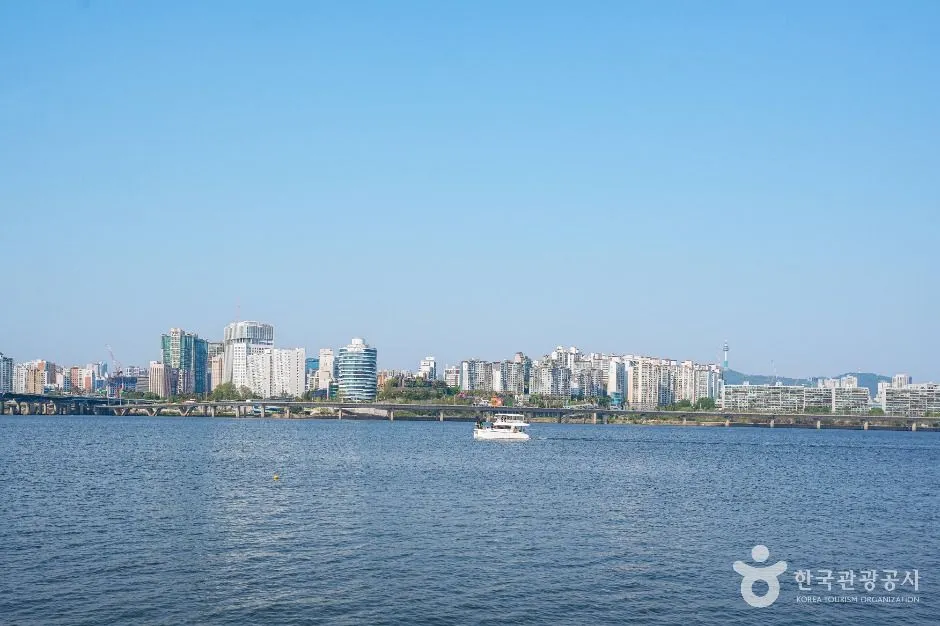
The Han River after dark. In summer Seoul’s parks fill between 20:00 and midnight, not in the afternoon. Fried chicken and beer delivered to a mat on the grass is not a tourist activity — it is what the city does.
If you are choosing dates
Avoid mid-July to mid-August if heat is a problem for you. That window contains the peak of the monsoon humidity and the bok days, and it is also when Korean domestic holidays cluster, so the coast is expensive and full.
Early June and September are the compromise. June 2025 was itself a record (22.9°C), so early is doing less work than it used to — but it still beats August.
If you must come in August, plan the day inverted: indoors or coastal from 11:00 to 17:00, outdoors after sunset. Korean cities are built for this. Shops, cafés, markets and subways are aggressively air-conditioned, and the evening is when everything happens.
The other seasons
- Spring — when the cherry blossom actually opens, and why the window is about a week
- Winter — when it snows and where, which is not where you would guess
- Autumn — when the colour peaks, and the relief that follows August
All four on one chart: the month-by-month calendar.
What this article does not claim
These are one summer’s figures. 2025 was the hottest on record, and we have said so rather than presenting it as typical. The normals beside each figure are the honest comparison; use those for planning, not the 2025 column.
We have not forecast the coming summer. Nothing here says what this year or next year will do.
The bok days move. They are set by the traditional calendar and fall on different dates each year, roughly between mid-July and mid-August. Check the year you are travelling rather than relying on a fixed date.
We have not tested iyeol-chiyeol. Whether hot food helps in hot weather is a physiological question we have not researched. What we can report is that it is a widespread and dated custom with restaurant queues attached.
Valley and beach conditions vary enormously by location and year, and we have not surveyed individual sites. Treat the regional advice as direction, not as a specific recommendation.
Read next
Sources & last checked
- Public institution · checked 2026-08-15 [2025년 여름철 기후특성] 폭염-호우 반복, 집중호우-가뭄 지역 양극화 — 기상청 보도자료 (2025-09-04)
- Public institution · checked 2026-08-14 외식비 — 한국소비자원 참가격 (삼계탕 지역별 평균가격, 2026년 6월)